
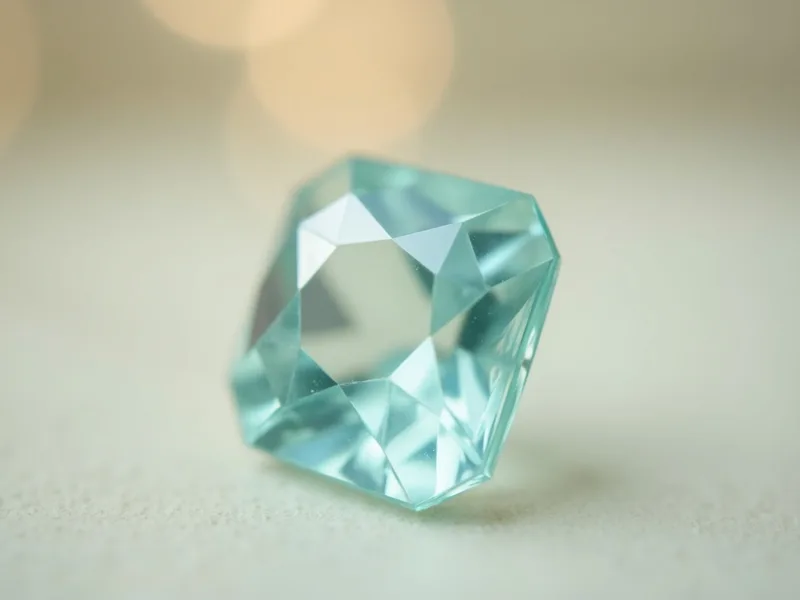
March birthstone
Aquamarine, Bloodstone
Aquamarine takes its name from the Latin for seawater, and that connection runs deep in its symbolism. Sailors once carried aquamarine as a talisman for safe passage, believing it could calm rough waters and protect against seasickness. Today it's still associated with peace of mind, clear communication, and emotional steadiness, making it a fitting stone for a month that bridges winter's end and spring's arrival.
Bloodstone, March's lesser known but historically rich second birthstone, is a dark green form of chalcedony scattered with red jasper flecks that look like drops of blood. Ancient and medieval lore connected it to courage, resilience, and vitality, and some early Christian traditions linked the red spots to the blood of Christ. It's a grounding counterpart to aquamarine's airy calm, symbolizing strength drawn from quiet endurance.
Aquamarine ranges from a faint, watery blue to a soft blue green, the color of shallow tropical seas. That pale blue has long been tied to calm, clarity, and openness, evoking clear skies and quiet water. Bloodstone offers contrast with its deep green base and red flecks, colors associated with vitality, courage, and grounded energy.
Aquamarine suits anyone who values calm clarity, especially those born under March's two zodiac signs, Pisces and Aries. Its soft blue tone feels right for dreamers and quiet thinkers, while its history as a sailor's talisman appeals to anyone who craves steadiness during change. Bloodstone, meanwhile, suits those drawn to a bit more grit and grounded resolve.
Aquamarine has been prized since ancient Rome, where fishermen and sailors carried it for protection at sea, and medieval lapidaries believed it could counteract poison. Bloodstone has its own long record, used in ancient Babylon for seals and carvings and later carried by soldiers for supposed protective strength. Both stones entered the modern birthstone list in the early 20th century, cementing March's dual identity.
Aquamarine is a durable gem, ranking 7.5 to 8 on the Mohs hardness scale, so it holds up well to everyday wear. Clean it with warm water, mild soap, and a soft brush, and avoid harsh chemicals or ultrasonic cleaners if the stone has inclusions or fractures. Store it separately from harder gems like diamonds to prevent surface scratches over time.
Birthstones by month
Curious what else your month says about you? Read your zodiac sign or explore color meanings.
Frequently asked questions
›What is the March birthstone?
March has two official birthstones: Aquamarine, a pale blue green gem, and Bloodstone, a dark green stone with red flecks. Aquamarine is the more widely recognized and worn of the two, but both have long histories and are considered valid choices for anyone born in March.
›What does the color of Aquamarine symbolize?
Aquamarine's pale blue green color is associated with calm water, clear skies, and emotional steadiness. It has historically symbolized peace of mind and safe passage, especially for travelers and sailors, and today it's often linked to clarity, openness, and quiet composure in everyday life.
›Is Aquamarine a durable stone for everyday jewelry?
Yes. Aquamarine rates 7.5 to 8 on the Mohs hardness scale, making it a solid choice for rings, bracelets, and other pieces worn often. It's fairly resistant to scratches, though it should still be protected from hard knocks and cleaned gently to keep its clarity.
›Why does March have two birthstones?
Many months have more than one birthstone because different cultures and gem trade organizations historically recognized different stones. Aquamarine and Bloodstone were both tied to March in various traditions, and jewelers eventually kept both on modern birthstone lists rather than choosing just one.