
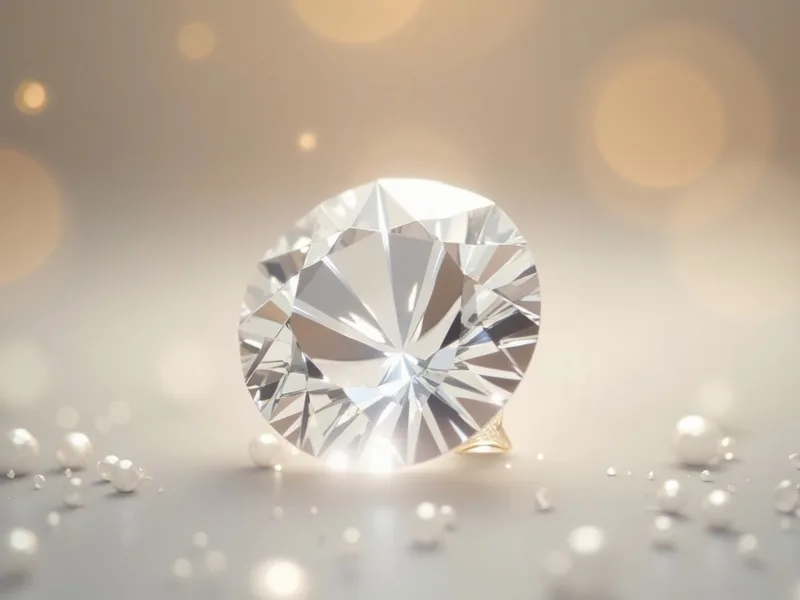
April birthstone
Diamond
Diamonds have carried symbolic weight for centuries, often standing for clarity, integrity, and unbreakable bonds. Their name comes from the Greek word 'adamas,' meaning unconquerable or indestructible, a nod to the stone's remarkable hardness. That toughness has made diamonds a natural symbol of enduring love and commitment, which is part of why they became the standard for engagement rings.
Beyond romance, diamonds are associated with strength of character and inner clarity. Some see the stone's ability to take in light and split it into flashes of color as a reminder to look at situations from multiple angles. Because April sits at the start of spring, the diamond's brightness has also come to represent fresh starts and clear eyed hope for what's ahead.
Most diamonds sold are colorless or near colorless, graded on a scale from D (colorless) to Z (light yellow or brown). Colorless stones are associated with clarity, honesty, and light itself. Fancy colored diamonds also occur naturally in yellow, brown, pink, blue, and even green, each shade adding its own layer of meaning and rarity to the stone.
Diamond suits anyone drawn to understated strength and lasting quality, which fits the two zodiac signs tied to April: Aries and Taurus. Aries, bold and direct, matches the diamond's brilliance and clarity, while grounded Taurus connects with its durability and quiet permanence. Really, though, the stone works for anyone who appreciates something built to last a lifetime.
Diamonds have been valued since ancient India, where they were first mined more than 2,000 years ago and used in religious icons for their light reflecting brilliance. Ancient Greeks believed they were splinters of fallen stars or tears of the gods. Medieval Europeans thought diamonds could ward off harm, and by the 20th century, they'd become firmly linked with engagement and marriage in Western culture.
Diamonds rank a 10 on the Mohs hardness scale, the hardest natural material known, so they resist scratching from everyday wear extremely well. Still, they can chip if struck at the right angle, so avoid hard knocks. Clean with warm water, mild dish soap, and a soft brush, and have prongs checked periodically by a jeweler to keep stones secure.
Birthstones by month
Curious what else your month says about you? Read your zodiac sign or explore color meanings.
Frequently asked questions
›What is the April birthstone?
The April birthstone is the diamond. It's the only widely recognized birthstone for the month, known for its exceptional hardness and brilliant sparkle. While colorless diamonds are the classic choice, the stone also occurs naturally in shades like yellow, pink, and blue, all of which count as April's birthstone.
›What does the diamond symbolize?
Diamonds are associated with strength, clarity, and lasting love, largely because of their extraordinary durability and brilliant light reflection. They've long been given as symbols of commitment, particularly in engagements and anniversaries, and are also linked to purity and inner resilience across many cultures.
›Are all diamonds clear or colorless?
No. While colorless diamonds are the most familiar and widely sold, diamonds occur naturally in a range of colors including yellow, brown, pink, blue, and green. These are called fancy colored diamonds, and some, like certain pinks and blues, are rarer and more valuable than colorless stones.
›Is diamond a good stone for everyday jewelry?
Yes. Diamond's hardness of 10 on the Mohs scale makes it one of the most durable gemstones for daily wear, resisting scratches better than almost any material. It still deserves basic care, like avoiding hard impacts and cleaning regularly, but it holds up exceptionally well in rings worn every day.