
Islamic meaning of tree in a dream
How the classical tradition of Ibn Sirin reads a tree.
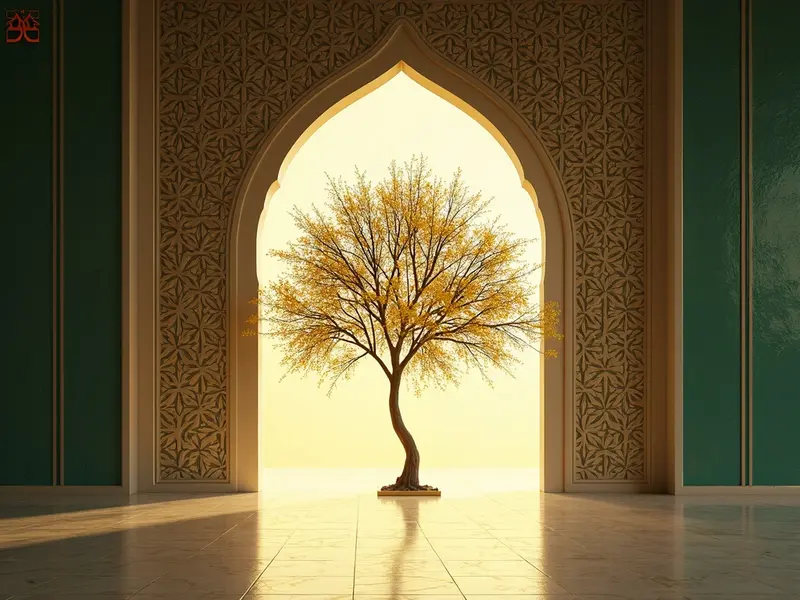
A tree in a dream has long been treated by classical interpreters as a living symbol of a person's life and connections. Its roots can suggest one's origins or faith, its trunk the strength of one's character, and its branches the family, friends, or good deeds that extend outward from a single life.
In the tradition associated with Ibn Sirin, a tall, healthy, fruit-bearing tree is often tied to good fortune, honest livelihood, or the arrival of children and blessings within a household. The kind of tree can matter too, with fruit trees frequently linked to benefit and reward that reaches the dreamer and those around them.
An-Nabulsi and later interpreters sometimes expanded this reading to include a person's standing among others, seeing a large shading tree as a picture of someone respected or relied upon, whose presence brings comfort to family or community, much like shade offered on a hot day.
Where a tree in a dream appears dry, uprooted, or stripped of leaves, the classical view tends to treat this gently, as a sign to look at one's health, finances, or relationships with a little more care, rather than as an alarming message. Good dreams in this tradition are considered a gift, and even a difficult image is usually read as guidance, not warning of harm.
In the classical tradition
Often reads a green, fruitful tree as a sign of blessing, family, or lawful provision for the dreamer.
Connects a large or shading tree to a respected person whose presence benefits others nearby.
Generally treats the type, health, and fruit of the tree as meaningful details worth reflecting on gently.
A green, sturdy tree full of fruit is widely read in the tradition as a sign of blessing, family growth, or an honest source of provision opening up. Some see it as encouragement that one's efforts, faith, or relationships are bearing fruit, quietly and steadily, even if progress has felt slow lately.
A bare, dying, or uprooted tree is read more cautiously, sometimes pointing to a season of low energy, strained finances, or a relationship needing attention. Classical interpreters treat this as a gentle nudge toward care and reflection, not a prediction of loss, and many such dreams simply mirror present worries.
Looking for the everyday, psychological read too? See the general dream meaning of a tree →
Frequently asked questions
›What does a tree mean in a dream in Islam?
In the classical tradition, a tree often represents a person's life, family, or character, with its health and fruit reflecting blessing, growth, or provision. A green tree tends to be read hopefully, while a dry one invites gentle self-reflection rather than worry.
›Is seeing a tree in a dream a good sign in Islam?
Many classical interpreters, including Ibn Sirin, associate a flourishing, fruitful tree with good news, family blessings, or steady livelihood. A good dream is generally considered a welcome gift in this tradition, though meaning can shift with the tree's condition and context.
›What does a dead or dry tree mean in a dream Islamically?
A dry or dying tree is usually read with care rather than fear, sometimes pointing to fading energy, health, or provision that deserves attention. In the tradition, this is treated as a quiet invitation to reflect and renew, not as a sign of certain hardship.
›Does the type of tree matter in Islamic dream interpretation?
Yes, classical interpreters often note the kind of tree, with fruit-bearing trees like palm or olive frequently linked to reward, sustenance, or a well-lived life. A large shading tree is sometimes tied to a respected figure whose presence benefits those nearby.