
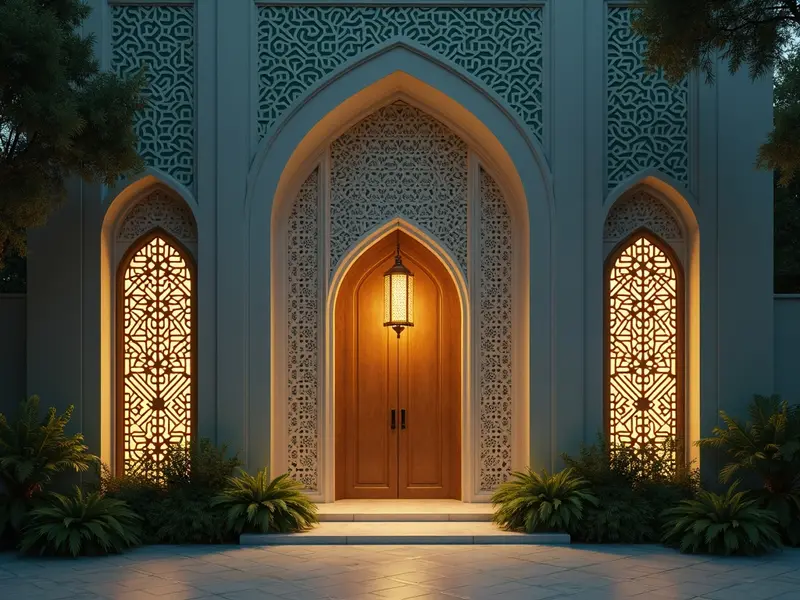
Islamic meaning of house in a dream
How the classical tradition of Ibn Sirin reads a house.
Classical interpreters such as Ibn Sirin often treated a house in a dream as a mirror of the dreamer's own life. The rooms, condition, and feeling of the house were thought to speak to one's body, faith, family circumstances, or reputation among others.
In this tradition, a house that feels solid, clean, and full of light has often been read as a sign of a settled heart, good character, or a stable household. Some interpreters connected a beautiful or spacious house to blessings that are on their way, or to a season of peace within the family.
A house that is crumbling, dark, or unfamiliar has traditionally been read differently, though never as something to fear. Interpreters like An-Nabulsi tended to see such images as gentle prompts, pointing to worries, a need for repair in one's affairs, or a call to strengthen faith and relationships rather than as a warning of harm.
The specific details mattered greatly in this tradition. A new house could suggest a new chapter, moving into an old childhood home might point to memory or return, and doors, windows, or the roof each carried their own shades of meaning depending on the dreamer's life and intention.
In the classical tradition
Often read a house as a reflection of the dreamer's body, faith, or family life, with its condition mirroring inner or outer circumstances.
Paid close attention to the parts of the house, such as doors and rooms, seeing them as pointing to specific areas of a person's affairs or relationships.
Generally held that a dream of comfort and light is a welcome sign, echoing the gentle understanding that good dreams are considered a gift, as in the well-known story of Prophet Yusuf.
A warm, sturdy, or spacious house has often been seen in the tradition as a sign of blessing, protection, and a settled life. It may point to a strong household, good standing among family and neighbors, or a heart that feels secure and at peace with its faith.
A house that feels broken, dark, or strange to you has traditionally been read as a gentle nudge rather than a bad sign. It may simply reflect worry, a need for care in family matters, or an invitation to tend to something in your inner life with patience.
Looking for the everyday, psychological read too? See the general dream meaning of a house →
Frequently asked questions
›What does a house mean in a dream in Islam?
In the classical tradition, a house is often understood as a symbol of the dreamer's self, faith, or family life. Its condition and feeling, whether warm and solid or dim and unfamiliar, have traditionally been read as reflections of one's inner state or circumstances, rather than fixed predictions.
›Is dreaming of a new house a good sign in Islam?
Many in the tradition have read a new, pleasant house as a hopeful sign, sometimes linked to a fresh chapter, new blessings, or improved circumstances. It has often been seen as encouraging, though interpreters always encouraged reflecting on one's own life alongside the dream.
›What does it mean to dream of an old or damaged house in Islam?
An old or damaged house has traditionally been read as a gentle symbol of worry, unfinished matters, or a call to strengthen one's faith or family ties. It has not been treated as an omen of harm, but rather as an invitation to quiet reflection and care.
›Does the Quran or hadith explain house dreams directly?
There is no specific verse or hadith that defines house symbols directly. Instead, this understanding comes from the broader classical tradition of Muslim dream interpretation, built by scholars like Ibn Sirin, alongside the general teaching that good dreams are considered a gift.