
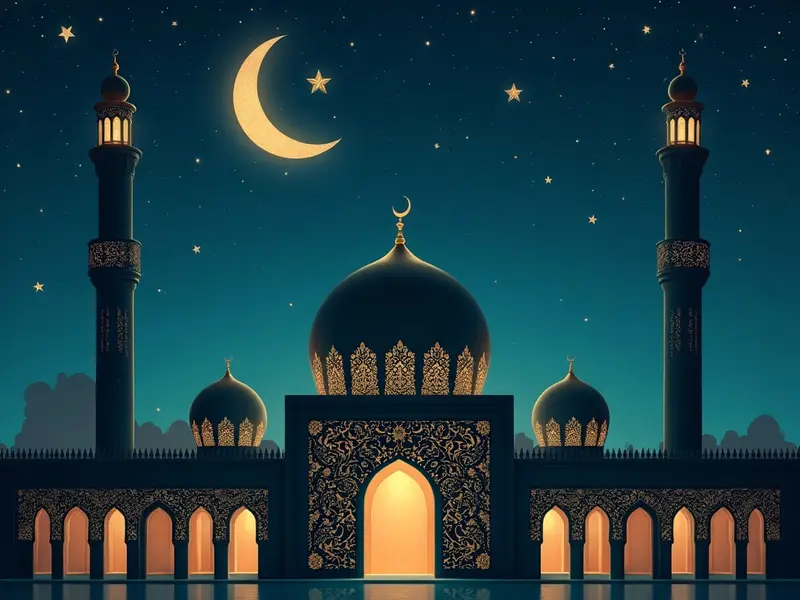
Islamic meaning of stars in a dream
How the classical tradition of Ibn Sirin reads the stars.
Stars have held a gentle, hopeful place in the Muslim dream tradition for centuries. Long before modern dream apps, scholars like Ibn Sirin and later An-Nabulsi wrote about the sky and its lights as a mirror of a person's standing, family, and guidance in life. A star, in that view, is rarely random. It tends to point toward something being illuminated for the dreamer.
Many in the tradition connect stars to people of high standing, such as scholars, leaders, or elders, since a star gives light to those who look up at it. Seeing many stars has sometimes been read as a sign of a large family, good children, or a wide circle of respected companions. A single bright star has often been tied to a person of particular honor entering the dreamer's life, or one's own reputation growing.
It's common for people to bring up the story of Prophet Yusuf, peace be upon him, who saw eleven stars along with the sun and moon bowing to him. This narrative is central to how many Muslims think about dreams altogether, since it points to the idea that a true, good dream can carry real meaning and is considered a gift. Scholars have long treated this story gently, as a reminder that some dreams reach beyond the ordinary.
The condition of the stars in the dream matters in this tradition. Bright, steady, or rising stars are generally read in a hopeful light, while a star that falls, dims, or disappears has sometimes been associated with a loss of position, a strained relationship, or a season of uncertainty passing through someone's life. None of this is treated as fixed; it is understood as one layer of meaning among many, shaped by the dreamer's own life and character.
In the classical tradition
Often linked stars to people of honor, scholars, and family, with brighter and more numerous stars read as a hopeful sign of standing or blessing.
Expanded on this by tying particular star patterns and their brightness or dimness to shifts in status, relationships, or guidance in the dreamer's waking life.
Frequently references the dream of Prophet Yusuf, peace be upon him, as the foundational example of stars representing honored figures and a meaningful, true dream.
A hopeful reading sees stars as light guiding you forward, a sign of honor, wisdom, or good people around you. Many bright, clear stars have traditionally suggested a growing family, respected reputation, or a season where your efforts and character are recognized and appreciated by others.
A more cautious reading notices a star that falls, fades, or vanishes, which some in the tradition connect to a loss of status, a strained bond, or a passing worry. This is never treated as a firm warning of harm, more a gentle nudge to tend to a relationship or responsibility with care.
Looking for the everyday, psychological read too? See the general dream meaning of the stars →
Frequently asked questions
›What does the stars mean in a dream in Islam?
In the classical tradition, stars are often understood as symbols of guidance, honor, family, or respected people in the dreamer's life. Interpreters like Ibn Sirin generally read them in a hopeful light, though the exact meaning has always depended on how the stars looked and the dreamer's own circumstances.
›Is seeing stars in a dream a good sign in Islam?
Many in the tradition consider bright, clear, or numerous stars a hopeful sign tied to honor, family, or guidance. It is not treated as a guaranteed promise of good fortune, simply one encouraging layer of meaning within a much older, living tradition of dream reflection.
›What does a falling star mean in an Islamic dream?
Some classical interpreters connected a falling or fading star to a shift in status, a strained relationship, or a passing season of uncertainty. This has traditionally been read gently, as a sign to pay attention to something rather than a firm prediction of hardship.
›Why are stars connected to Prophet Yusuf's dream?
Prophet Yusuf, peace be upon him, is described as seeing eleven stars along with the sun and moon bowing to him. This story is often cited as the root of star symbolism in Islamic dream interpretation, and as a reminder that meaningful dreams are considered a gift.