
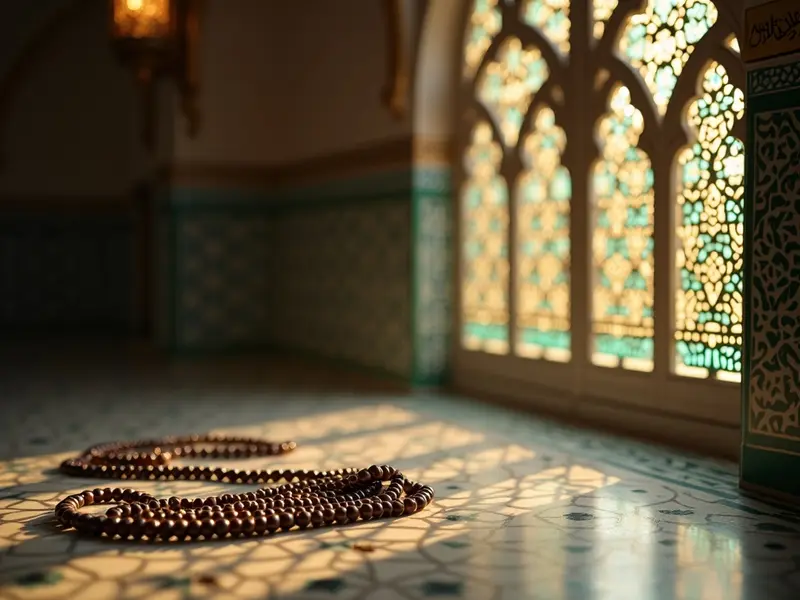
Islamic meaning of prayer beads (tasbih) in a dream
How the classical tradition of Ibn Sirin reads prayer beads.
Prayer beads, or tasbih, show up often in the classical Muslim dream tradition as a symbol tied to remembrance of God and inner steadiness. Because the beads are used for counting praise and reflection in waking life, dream interpreters have long connected them to sincerity, patience, and a calm, disciplined heart.
Scholars such as Ibn Sirin, writing in the early tradition of Islamic dream interpretation, often treated devotional objects like prayer beads as reflections of a person's inner state or reputation. Holding or using beads in a dream was sometimes read as a sign of good character, trustworthiness, or a return to God after a period of distraction.
An-Nabulsi, writing later, expanded on these themes and paid attention to small details, such as whether the beads were whole, broken, given as a gift, or lost. In that layered approach, the condition and context of the beads could shift the meaning slightly, though the overall tone usually stayed gentle and hopeful.
It's worth remembering that within this tradition, dreams are considered deeply personal. The same image can carry a different shade of meaning depending on the dreamer's own life, faith, and circumstances, so these readings are best held loosely, as reflection rather than certainty.
In the classical tradition
Often linked prayer beads to sincerity of faith, good reputation, and a heart turning back toward remembrance of God.
Paid close attention to detail, such as broken or lost beads, seeing these as possible signs of distraction or a call to renew one's focus.
Generally treats prayer beads as a comforting, hopeful symbol tied to devotion, patience, and inner steadiness rather than anything to fear.
Many in the classical tradition would read prayer beads warmly, as a sign of sincerity, good character, or a heart at peace. Some see it as encouragement that the dreamer is on a steady path, or being drawn gently toward more mindfulness, patience, and quiet remembrance in their daily life.
If the beads appeared broken, scattered, or lost, some classical interpreters read this as a gentle reminder to slow down or restore focus in one's spiritual or personal life. This isn't meant as a warning to worry over. It's usually understood as an invitation to reset, not a sign of anything frightening.
Frequently asked questions
›What does prayer beads mean in a dream in Islam?
In the classical Muslim dream tradition, prayer beads are usually read as a hopeful symbol tied to remembrance of God, sincerity, and inner calm. Interpreters like Ibn Sirin often connected them to good character or a heart returning to steadiness, though the exact meaning can shift with the dream's details and the dreamer's own life.
›Is seeing prayer beads in a dream a good sign?
Generally, yes, within this tradition. Good dreams are often considered a welcome gift, and prayer beads tend to carry a gentle, positive tone tied to faith, patience, and sincerity. Some interpreters do note that details like broken beads can add a softer, more reflective shade to the meaning.
›What does it mean if the prayer beads break in a dream?
Some classical interpreters, including An-Nabulsi, treated broken or scattered beads as a quiet call to restore focus or steadiness, rather than a troubling sign. It's often read as encouragement to gently renew one's attention to what matters, without any sense of fear attached.
›Does the Islamic tradition connect this to the story of Prophet Yusuf?
Not directly, but the broader principle behind Yusuf's story, that meaningful dreams can carry insight and are considered a gift, shapes how many interpreters approach any devotional symbol, including prayer beads, with care, humility, and respect rather than certainty.