
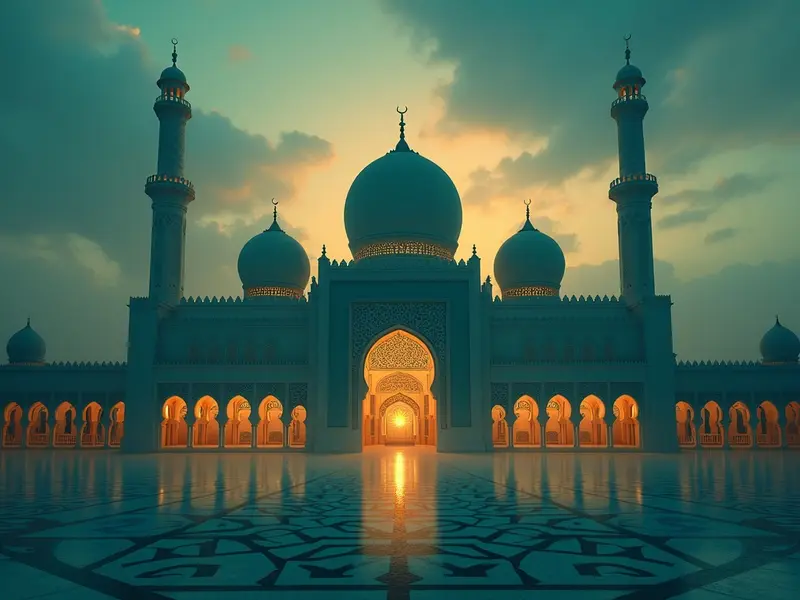
Islamic meaning of a mosque in a dream
How the classical tradition of Ibn Sirin reads a mosque.
Seeing a mosque in a dream tends to sit gently in the mind afterward, and within the classical tradition of Islamic dream interpretation, that feeling is often taken seriously as meaningful.
Early interpreters like Ibn Sirin generally treated a mosque as a place tied to faith, prayer, and community, so dreaming of one was often read as a sign pointing toward guidance, sincerity, or a return to religious practice. An-Nabulsi, writing later, built on this and paid close attention to details, such as whether the mosque was full of light and worshippers, quiet and empty, grand or humble, old or newly built, since each detail could shift the tone of the reading.
In this tradition, the state of the mosque often mirrors something about the dreamer's own inner life. A bright, welcoming mosque has often been linked to comfort, blessing, and a settled heart, while a mosque that feels distant, damaged, or hard to reach has sometimes been read as reflecting worry, distance from one's usual routine, or a season of searching.
It also helps to remember the broader principle in this tradition, echoed in the well-known dream story of Prophet Yusuf, that good and meaningful dreams have long been regarded as a kind of gift, worth reflecting on gently rather than rushing to a fixed conclusion.
In the classical tradition
Often linked a mosque to faith, sincerity, and a leaning toward good conduct or religious devotion.
Paid close attention to the mosque's condition, light, and crowd, seeing these details as shaping the dream's tone.
Generally treats a mosque as a hopeful symbol, while leaving room for context and the dreamer's own life to shape its meaning.
Many in this tradition read a mosque, especially one that feels warm, full of light, or peaceful, as a sign of coming closer to faith, finding comfort, or entering a season of clarity and steadiness. It has often been associated with blessing, sincerity of heart, and a quiet sense of being on the right path.
If the mosque feels empty, far away, or hard to enter, some in the tradition have read this gently as a nudge, perhaps pointing to distance from one's usual routine or a quiet longing for reconnection. It is not treated as a warning to fear, more like an invitation to slow down and reflect.
Looking for the everyday, psychological read too? See the general dream meaning of a mosque →
Frequently asked questions
›What does a mosque mean in a dream in Islam?
In the classical tradition, a mosque in a dream is generally seen as tied to faith, guidance, and inner peace. Interpreters such as Ibn Sirin often read it as a hopeful symbol, though the exact meaning has long been understood to shift with details like the mosque's light, condition, and how the dreamer feels while there.
›Is dreaming of a mosque a good sign in Islam?
Many within the tradition have leaned toward reading it as a good sign, especially when the mosque feels peaceful, bright, or welcoming. It is often associated with sincerity, comfort, and closeness to one's faith, though interpreters have also stressed that context and personal circumstance matter.
›What does an empty mosque in a dream mean?
Some classical interpreters read an empty or quiet mosque as reflecting a season of searching, distance from routine, or a quiet inner longing, rather than anything alarming. It has often been treated as an invitation to reflect gently, not a sign of anything to fear.
›Does entering a mosque in a dream have a special meaning?
In the tradition, entering a mosque has sometimes been linked to drawing closer to faith or finding a sense of shelter and steadiness. The feeling of the entry, whether ease or difficulty, has often been seen as adding shade and nuance to that reading.