
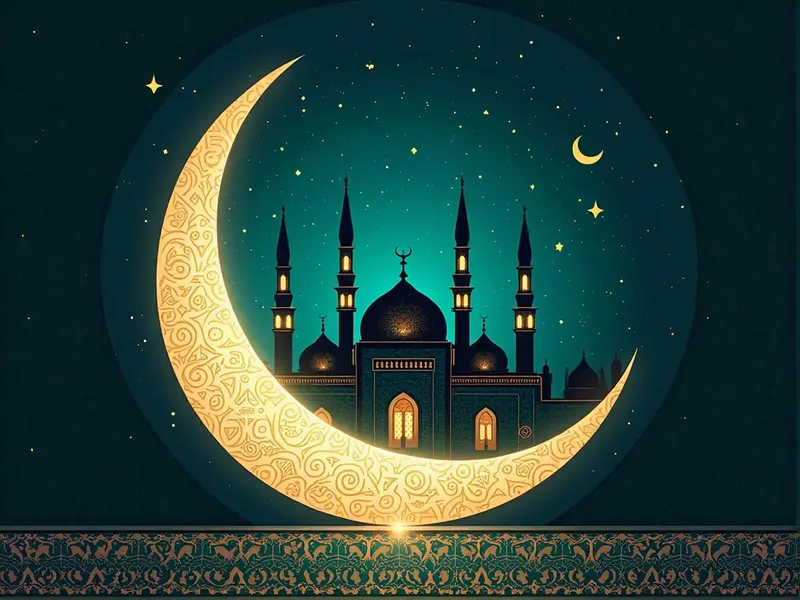
Islamic meaning of the moon in a dream
How the classical tradition of Ibn Sirin reads the moon.
Across the classical Muslim dream tradition, the moon is treated as one of the more favorable images a person can see at night. Interpreters such as Ibn Sirin often linked it to light reaching someone through darkness: guidance, clarity, or a piece of good news making its way to the dreamer.
The moon was also read as a symbol of people who hold light and authority in someone's life. Depending on the details of the dream, scholars in this tradition connected it to a father, a husband, a ruler, a teacher, or a figure of trusted standing. A bright, clear moon was usually taken as a hopeful sign tied to that person or role.
Phase and condition mattered a great deal in the old manuals. A full moon was often linked to completion, honor, or a matter reaching its fullness. A crescent moon was tied to new beginnings, and a moon rising after darkness was tied to relief following hardship. A dim, clouded, or eclipsed moon was read more cautiously, as a sign of worry, delay, or a respected figure passing through a hard season, not as a fixed warning.
Many in this tradition also gently recall the story of Prophet Yusuf, who in the Qur'an dreamed of the sun, the moon, and eleven stars bowing to him, a dream later understood as a sign of honor unfolding over time. This narrative is one reason the moon carries such a hopeful weight in Islamic dream reading, even centuries later.
In the classical tradition
Read the moon as tied to guidance, honor, and respected figures such as a father, husband, or leader, with a bright moon seen as favorable.
Emphasized the moon's phase and clarity, connecting a full or rising moon to completion and relief, and a faint or clouded moon to passing worry.
Often draws on the dream of Prophet Yusuf, where the moon appears alongside the sun and stars as a sign of honor unfolding gradually.
A clear, bright, or rising moon is often welcomed in this tradition as a sign of good news, guidance, or honor arriving in due time. It can point to a respected person's blessing, a return of hope after a hard stretch, or a quiet matter finally becoming clear.
A dim, clouded, or eclipsed moon was read more gently as a hint of worry, delay, or a difficult season touching someone respected in the dreamer's life. Classical interpreters didn't treat this as fixed doom, more a nudge to stay patient and steady through uncertainty.
Looking for the everyday, psychological read too? See the general dream meaning of the moon →
Frequently asked questions
›What does the moon mean in a dream in Islam?
In the classical tradition, the moon is generally seen as a hopeful symbol tied to guidance, honor, or a respected figure in the dreamer's life. Interpreters such as Ibn Sirin often linked a clear, bright moon to good news, while its phase and condition were believed to shape the finer meaning.
›Is seeing a full moon in a dream a good sign in Islam?
A full moon was often read by classical scholars as a sign of completion, honor, or a matter reaching fullness. Many considered it a hopeful image, though the wider details of the dream, like the moon's brightness and setting, were also taken into account.
›Does a dark or eclipsed moon in a dream mean something bad?
Not necessarily. In the classical tradition, a dim or clouded moon was read more as a sign of passing worry, delay, or hardship touching a respected figure, not as a fixed warning. It was generally approached with patience rather than fear.
›Why is the moon connected to Prophet Yusuf's dream?
In the Qur'an, Yusuf dreams of the sun, moon, and eleven stars bowing to him, a dream later understood as pointing to honor that unfolds gradually over time. Many in the dream tradition see this story as part of why the moon carries such hopeful meaning.