
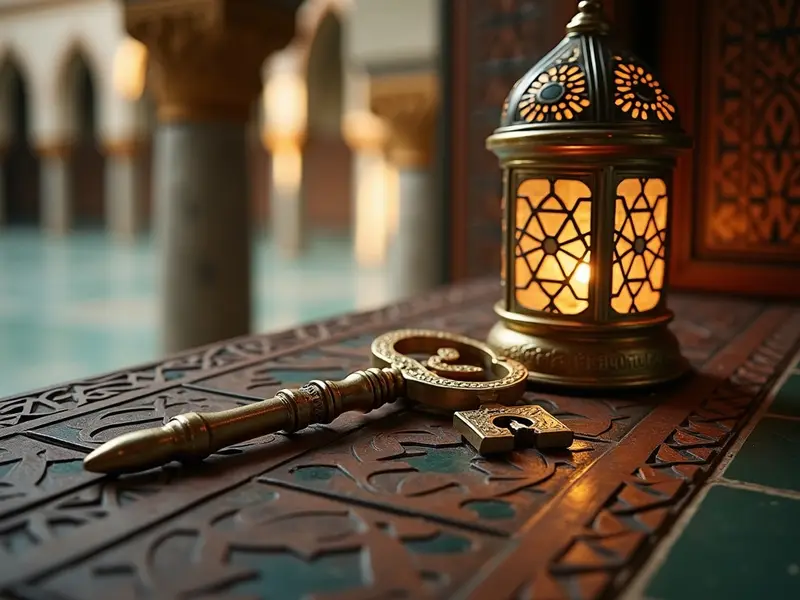
Islamic meaning of key in a dream
How the classical tradition of Ibn Sirin reads a key.
A key showing up in a dream has long been read by classical interpreters as a sign connected to relief, responsibility, and doors that are about to open. In a tradition that treats good dreams as a gentle gift, a key often carries a quiet, encouraging tone rather than a heavy one.
Interpreters such as Ibn Sirin often linked keys to matters of trust, since a key placed in someone's hand suggests they are being given charge over something, whether that is a task, a household, a piece of knowledge, or a relationship. Being handed a key in a dream was frequently seen as a sign of being found reliable.
An-Nabulsi and others in the same line of thought paid attention to the condition of the key and what it seemed to unlock. A bright, working key was generally read as good news, hinting at a way through a problem that once felt stuck. A broken, rusted, or lost key carried a more cautious note, sometimes pointing to a delay, a missed opportunity, or a responsibility that feels heavier than it should.
Many in the tradition also connected keys to knowledge and guidance, since a key opens what was previously hidden or unclear. Seen this way, the dream can gently reflect a season where understanding, direction, or peace of mind is coming within reach.
In the classical tradition
Read a key as a sign of trust or authority being placed in the dreamer's hands, often tied to relief from a burden.
Paid close attention to the key's condition and what it opened, seeing a working key as a hopeful sign of a path becoming clear.
Often linked keys to knowledge and guidance, drawing a soft parallel to gifts of insight described in dream narratives like that of Prophet Yusuf.
Many hold this as an encouraging dream. A key often points to relief on the way, a door opening after a long wait, or being trusted with something meaningful. It can suggest that patience is paying off, and that clarity, support, or a fresh start is closer than it feels right now.
If the key was broken, lost, or wouldn't turn, some in the tradition read this gently as a nudge to slow down before taking on new responsibility, or as a sign that a solution needs a little more patience. It is not viewed as bad news, simply a call for care.
Looking for the everyday, psychological read too? See the general dream meaning of a key →
Frequently asked questions
›What does a key mean in a dream in Islam?
In the classical tradition, a key is often seen as a hopeful symbol tied to relief, trust, and opportunities opening up. Interpreters like Ibn Sirin connected it to being given responsibility or being shown a way through a difficulty. The specific meaning can shift depending on the key's condition and what it unlocks in the dream.
›Is finding a key in a dream a good sign in Islam?
Many classical interpreters read finding a key as a positive sign, often pointing to a solution appearing, new trust being extended, or a fresh opportunity. Since good dreams are widely regarded as a gift, this kind of dream is usually met with quiet encouragement rather than concern.
›What does losing a key in a dream mean in Islam?
Losing a key is sometimes read more cautiously, hinting at a delay, a missed chance, or a responsibility that feels harder to hold onto. Traditionally, this is not treated as an alarming sign, more a gentle prompt to be patient or careful with something important in waking life.
›Does a golden or silver key have a different meaning in Islamic dream interpretation?
Some interpreters paid attention to a key's material, with gold or silver sometimes linked to added value, status, or a matter of higher importance. This detail was generally seen as adding emphasis to the main reading rather than changing its meaning entirely.