
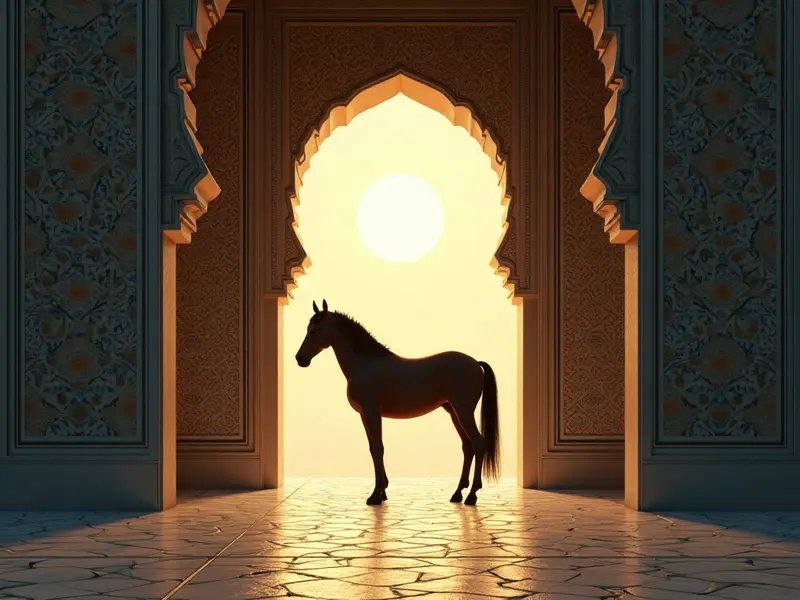
Islamic meaning of horse in a dream
How the classical tradition of Ibn Sirin reads a horse.
Across the classical Muslim dream tradition, a horse tends to be read as a favorable image. Scholars like Ibn Sirin and An-Nabulsi wrote about animals and objects in dreams as reflections of a person's standing, character, or coming circumstances, and the horse in particular was often tied to honor, authority, and forward movement in life.
A calm, well-formed horse was often understood as a sign of good standing, a rise in reputation, or news of something favorable arriving. Riding a horse comfortably could be read as a hint of gaining respect, responsibility, or a position of trust, since horses were historically linked with leaders, travelers, and those entrusted with important tasks.
The tradition also paid close attention to details. A white horse was sometimes tied to purity of intention or a clean reputation, while a wild or unmanageable horse might point to restlessness, a challenge to one's self-control, or a situation not yet fully in hand. Losing a horse, or a horse that grows weak or ill, was sometimes seen as a gentle caution about a loss of status, energy, or direction, though never framed as something to fear.
It helps to remember that the classical scholars never separated the animal from the dreamer's own life. The same horse could carry a different shade of meaning depending on whether the dreamer was already in a position of responsibility, going through a hard season, or simply beginning a new chapter, which is part of why this tradition treats dream reading as an art of reflection rather than a fixed rulebook.
In the classical tradition
Held that a horse often points to honor, rank, or good tidings, with a healthy, calm horse read as an especially favorable sign.
Connected the horse's color, temperament, and condition to shades of meaning, from steady leadership to unsettled circumstances.
Generally treated riding a horse as a sign of rising status or trust, while an unruly or lost horse invited quiet self-reflection rather than worry.
Many in the tradition see a strong, well-behaved horse as a sign of honor, good reputation, or welcome news on the horizon. Riding one smoothly can suggest a season of steady progress, added responsibility, or recognition coming your way, echoing the broader idea that good dreams are considered a gift worth appreciating.
A wild, tired, or lost horse has sometimes been read as a gentle nudge to look at where you feel unsteady or stretched thin. This isn't a warning of misfortune, more an invitation in the tradition to notice where more patience, care, or grounding might be needed in daily life.
Looking for the everyday, psychological read too? See the general dream meaning of a horse →
Frequently asked questions
›What does a horse mean in a dream in Islam?
In the classical tradition, a horse is often linked to honor, good standing, or favorable news. Scholars like Ibn Sirin generally read it as a positive symbol, especially when the horse appears healthy and calm, though the exact meaning was always shaped by the dreamer's own circumstances.
›Is riding a horse in a dream a good sign in Islam?
Many classical interpreters viewed riding a horse smoothly as a hopeful sign, often tied to gaining respect, responsibility, or a stable path forward. A difficult or wild ride was sometimes read as a gentle hint to seek more balance or patience in a current situation.
›What does a white horse symbolize in Islamic dream interpretation?
A white horse has often been associated with purity of intention, a clean reputation, or dignity in the classical tradition. It was generally seen as one of the more favorable colors, though interpreters still considered the dreamer's full circumstances before settling on a meaning.
›Does a horse in a dream always mean something good in Islam?
Not always in the same way. The tradition holds that a strong, calm horse tends to be favorable, while a losing, wild, or sick horse invites quiet reflection rather than fear. Meaning was always weighed alongside the dreamer's life, not read as a fixed rule.