
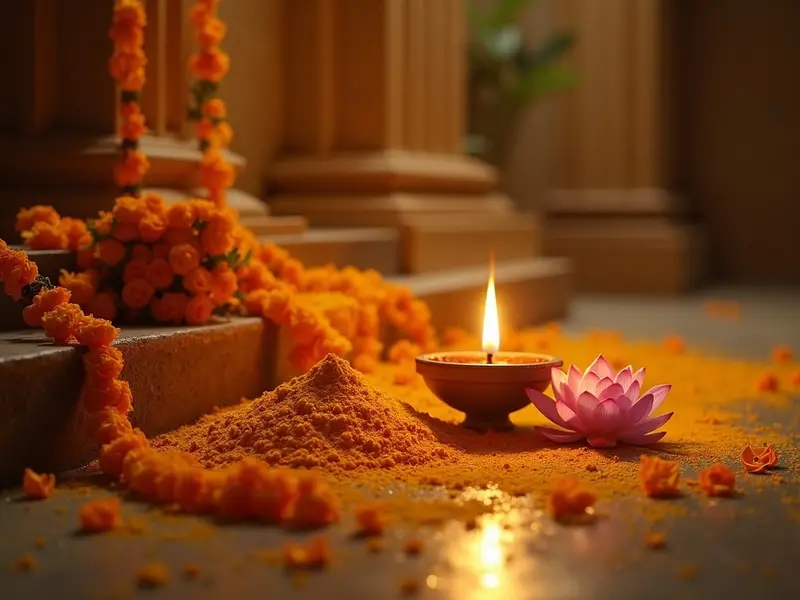
Hindu meaning of turmeric in a dream
What Swapna Shastra and traditional belief see in turmeric.
Turmeric holds a special place in Indian households long before it ever appears in a dream. It is the paste rubbed on a bride and groom before a wedding, the powder mixed into food for health, and the offering placed before the gods during pooja. Because of this deep everyday presence, Swapna Shastra tends to read turmeric in a dream as something warm and protective rather than troubling.
In traditional dream lore, seeing turmeric, especially bright and fresh, is often connected to purity, healing, and the blessings of a happy household. Some readings link it to Goddess Lakshmi, since her presence is associated with prosperity, and turmeric's golden color naturally echoes that symbolism of abundance and light entering one's life.
If the turmeric in the dream is being applied to skin, such as during a wedding ritual, traditional belief often connects this to an upcoming celebration, a new beginning, or a strengthening of family bonds. Dreaming of cooking with turmeric or adding it to food is sometimes read as a sign of nourishment, care, and steady well-being within the home.
Even if the turmeric appears in an unusual way, like spilled powder or a stained cloth, this is not seen as a bad omen in most traditional interpretations. Swapna Shastra usually treats turmeric as a benevolent symbol, so even messy or strange dream scenes involving it tend to be read gently, more as a nudge toward mindfulness than any kind of warning.
In Swapna Shastra and tradition
Generally treats turmeric as a sign of purity, blessing, and good fortune entering the dreamer's life.
Turmeric's link to weddings and rituals means dreaming of it is often read as a sign of upcoming celebration or family harmony.
In many South Indian households, turmeric is tied to Goddess Lakshmi, so the dream is sometimes seen as a quiet nod toward prosperity.
Most traditional readings see turmeric in a dream as a hopeful sign. It's linked to purity, protection, and the blessings that come with rituals and celebrations. Many take it as a gentle signal that harmony, health, or a joyful family occasion may be close at hand.
There isn't much caution attached to turmeric in traditional dream lore, since it's rarely seen as a negative symbol. If the dream feels unsettling, some interpreters simply suggest paying closer attention to home life or health, rather than expecting anything difficult ahead.
Frequently asked questions
›Is seeing turmeric in a dream good or bad in Hinduism?
Traditional dream interpretation almost always leans positive here. Turmeric is linked to purity, blessings, and celebration in daily Hindu life, so Swapna Shastra generally reads it as a comforting sign rather than something to worry about, even if the dream itself feels unusual or vivid.
›What does it mean to dream of turmeric powder?
Many traditional readings connect turmeric powder with cleansing and protection, since it's used in rituals and home remedies alike. Dreaming of it is often seen as a gentle reminder of care, whether that's caring for your health, your home, or your relationships.
›Does dreaming of turmeric relate to Goddess Lakshmi?
Some regional customs do draw that connection, since turmeric's golden color and its role in prosperity rituals echo qualities associated with Lakshmi. This is a softer, symbolic link rather than a fixed rule, and different families may read it in their own way.
›What does it mean to dream of turmeric during a wedding scene?
This is often read as one of the more joyful versions of the dream. Turmeric applied during a wedding ritual, known as haldi, is tied to new beginnings and blessings, so traditional belief usually connects this image with happy family events or a season of celebration ahead.