
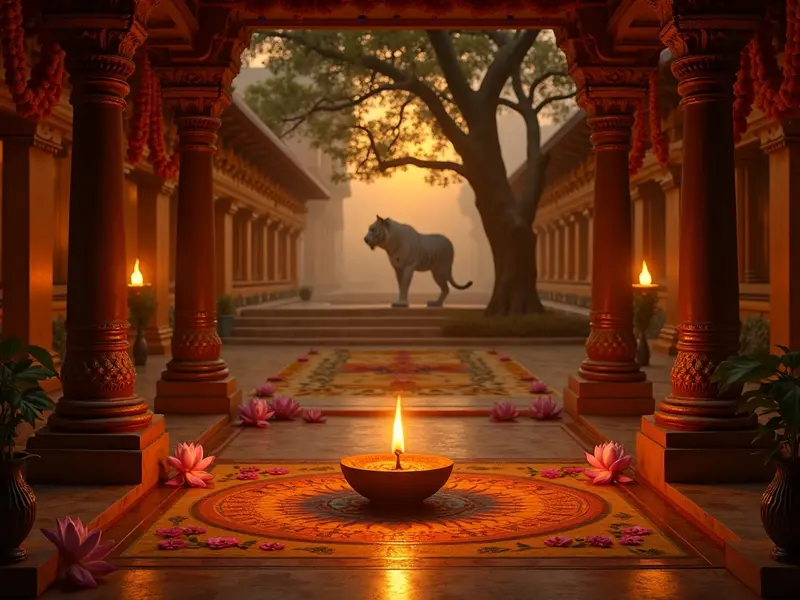
Hindu meaning of tiger in a dream
What Swapna Shastra and traditional belief see in a tiger.
In the old dream-lore of Swapna Shastra, animals rarely mean only one thing, and the tiger is a good example. Because it is one of the most respected creatures in Hindu symbolism, seen as the vahana of Goddess Durga, many traditional readings treat a tiger in a dream as a sign of inner strength rather than something to fear.
Some families read it as a nudge from within, as if your own courage or willpower is showing itself in animal form. A tiger walking calmly, or simply watching you, is often seen as reassuring in this light, a symbol of protection quietly present in your life.
A tiger that is chasing, snarling, or attacking is sometimes read differently, as pointing toward a real worry, rivalry, or pressure you feel unable to outrun in waking life. Traditional belief holds that this is less a warning of harm and more an invitation to face whatever feels overwhelming with steadier nerves.
Where the tiger appears near a temple, a river, or in the presence of the Goddess, many traditions consider this especially auspicious, linking the dream to blessing, courage, and being watched over.
In Swapna Shastra and tradition
Often reads a calm or watchful tiger as a sign of courage, protection, and rising personal strength.
Connects the tiger to Goddess Durga, so her vahana appearing in dreams is frequently seen as a quiet blessing.
In some communities, a tiger crossing your path in a dream is considered a sign that a difficult phase is about to turn in your favor.
Many traditional readings treat this dream as auspicious, a sign of courage, leadership, or protection entering your life. Because the tiger belongs to Goddess Durga, some see its calm appearance as her strength quietly standing beside you, especially during a season that asks for boldness or a firmer sense of self.
If the tiger felt threatening, traditional belief often links this to a fear, rival, or pressure you have been avoiding rather than an actual threat. It is usually read as encouragement to meet a challenge directly, with the reminder that the dream itself is not considered a sign of harm to come.
Looking for the everyday, psychological read too? See the general dream meaning of a tiger →
Frequently asked questions
›Is seeing a tiger in a dream good or bad in Hinduism?
Most traditional readings lean positive, connecting the tiger to courage, protection, and the presence of Goddess Durga. A tiger that feels calm or watchful is usually read as reassuring. Only an aggressive tiger is sometimes read as pointing to hidden stress, and even then it is seen as a nudge, not a bad omen.
›What does it mean to dream of a tiger chasing you, in Hindu belief?
Traditional interpretations often connect this to a fear or pressure you feel unable to escape in waking life, like a deadline, conflict, or self-doubt. Rather than predicting harm, this is usually read as encouragement to turn and face what has been chasing you, since the tiger itself is respected, not feared.
›Does a tiger in a dream relate to Goddess Durga?
Yes, many traditional readings draw this connection directly, since the tiger is considered her vahana. A tiger appearing gently or near sacred surroundings is often seen as her protection or strength quietly present in your life, offering reassurance rather than any need for concern.
›Can a dream about a tiger mean good luck is coming?
In several regional traditions, yes. A tiger that appears strong but not hostile is sometimes read as a sign that a difficult period is turning, bringing courage, opportunity, or a stronger sense of personal power in the days ahead.