
Hindu meaning of mountain in a dream
What Swapna Shastra and traditional belief see in a mountain.
A mountain rising in a dream tends to feel solid and unmoving, and Swapna Shastra often reads it that way too, as a symbol of steadiness, patience, and something in your life that is built to last. Mountains do not shift overnight, so this image is traditionally tied to slow, honest progress rather than a quick windfall.
Climbing a mountain in the dream is widely read as a good sign, suggesting effort, ambition, and a goal you are working toward with sincerity. Reaching the top is often described as a hint of coming recognition, a promotion, a settled home, or simply a sense that your hard work is being noticed.
Standing at the base and looking up, unsure how to begin, is sometimes read as a gentle nudge about a challenge that feels bigger than it truly is. A mountain crumbling or blocking the road ahead in the dream is traditionally tied to temporary obstacles, family disagreements, or delays, not lasting harm.
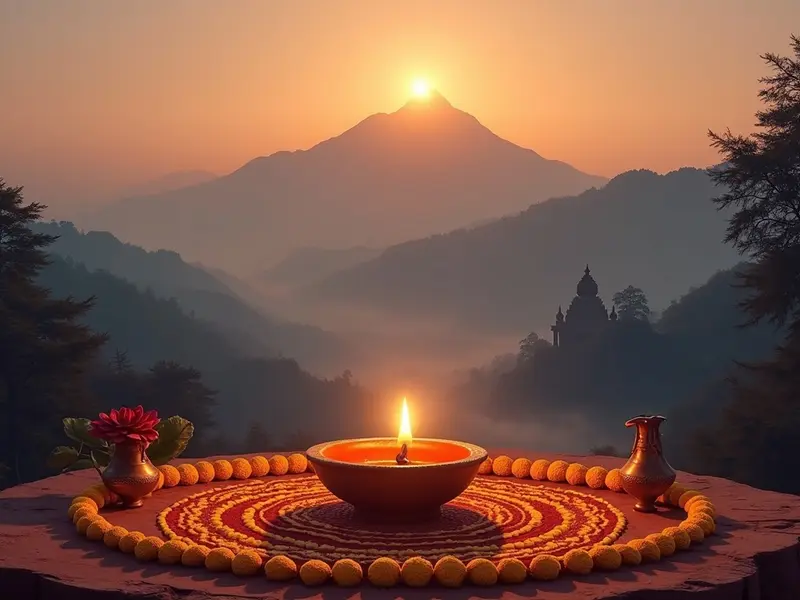
Some regional customs also connect mountains with sacred ground, since so many temples and pilgrimage sites in India sit on hillsides or peaks. In this reading, a mountain dream can carry a quiet spiritual undertone, like an invitation to slow down and reconnect with something larger than daily worries.
In Swapna Shastra and tradition
Reads a mountain as a sign of stability, patience, and success that builds slowly over time.
Climbing to the summit is often taken as a hopeful signal of coming achievement or recognition.
In many families, mountains are linked to sacred hillside temples, giving the dream a gentle spiritual tone.
A mountain standing tall in a dream is often read as an auspicious sign of stability and rising fortune. Climbing it or reaching the peak is traditionally tied to success earned through patience, a long-awaited achievement, family stability, or a season of steady, well-earned growth in life.
If the mountain feels impossible to climb, or if it crumbles or blocks your way, tradition reads this as a hint of passing obstacles, not lasting misfortune. It often points to a challenge that feels large right now but is expected to ease with patience, steady effort, and time.
Looking for the everyday, psychological read too? See the general dream meaning of a mountain →
Frequently asked questions
›Is seeing a mountain in a dream good or bad in Hinduism?
Traditionally, it leans toward good. Swapna Shastra generally reads a mountain as a sign of stability, patience, and slow, lasting success. Even a difficult scene, like struggling to climb, is usually read as a temporary challenge rather than a bad omen, so there is little reason to feel alarmed by this dream.
›What does climbing a mountain in a dream mean in Hindu tradition?
Climbing is widely read as a hopeful sign of effort paying off. Traditional belief often connects it with working steadily toward a goal, whether that is career growth, a stronger family life, or personal discipline, with the summit symbolizing recognition or success that arrives in due time.
›Does a crumbling or blocked mountain mean something bad will happen?
Not necessarily anything serious. Many readers of Swapna Shastra see this as a sign of short-term obstacles, delays, or family friction rather than lasting misfortune. The traditional advice is usually patience, since mountains, like real challenges, tend to be crossed rather than feared.
›Is there a spiritual meaning to a mountain in a dream?
Some see one, yes. Since many Hindu temples sit on hills or mountains, this image is sometimes read as a gentle spiritual invitation, a nudge to pause, seek guidance, or reconnect with faith. It is offered softly, as one possible layer of meaning, not a fixed rule.