
Hindu meaning of the moon in a dream
What Swapna Shastra and traditional belief see in the moon.
The moon has always held a gentle place in Indian dream lore. Swapna Shastra, the old tradition of reading dreams, treats the moon as a mirror of the mind and emotions, since the moon itself is linked to Chandra Dev, the deity who governs the mind, feelings, and the tides of inner life.
Traditional belief holds that seeing a clear, full moon in a dream is one of the more comforting signs a person can receive. Many families read it as a quiet nod toward peace at home, emotional steadiness, or good news arriving soon. Some also connect it with prosperity, since a bright moon has long been seen as a sign of abundance filling a household.
A moon that looks weak, half-hidden, or clouded over is read a little differently. This is not treated as a warning of harm, but more as a gentle suggestion that the mind may be unsettled, tired, or pulled in many directions. In Swapna Shastra, such images are usually an invitation to slow down and tend to one's emotional world, not a sign of anything to fear.
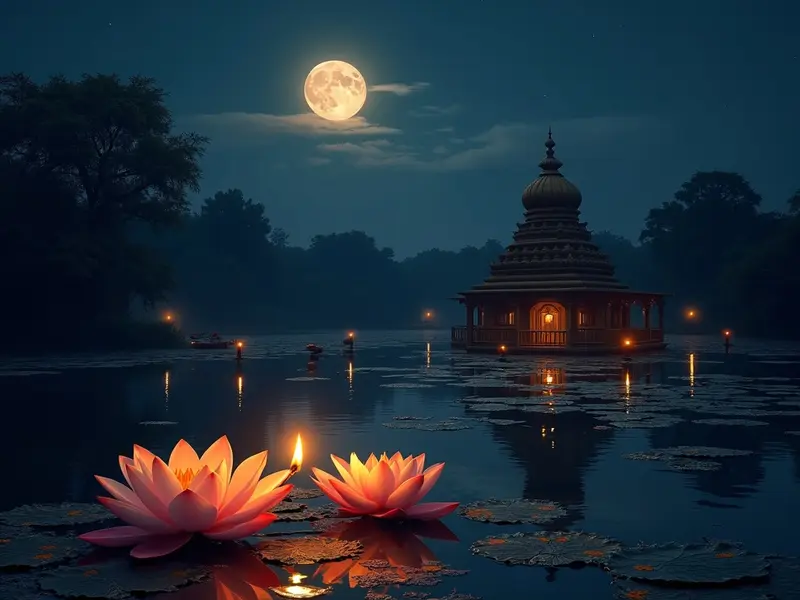
The moon appearing alongside water, a temple, or a night sky full of stars is often considered especially graceful in this tradition. Regional customs sometimes tie a bright moon dream to blessings from Chandra Dev himself, a quiet darshan thought to soothe the mind and calm old worries.
In Swapna Shastra and tradition
Reads a full, glowing moon as a sign of peace, good fortune, and emotional balance.
Connects the moon with Chandra Dev, seeing the dream as a gentle blessing on the mind and feelings.
In some households, a moon dream near a festival night is considered a particularly graceful and welcome sign.
Seeing a full, bright moon is widely read as one of the gentler, more welcome dreams in this tradition. It is often tied to family harmony, emotional steadiness, and quiet prosperity finding its way to the dreamer. Some also see it as a soft blessing from Chandra Dev, calming the mind and easing old worries.
A dim, clouded, or shrinking moon is not read as a bad omen so much as a gentle nudge. Swapna Shastra tends to see it as a sign of a restless or overloaded mind rather than any coming trouble. Many take it simply as a cue to rest more and let strong emotions settle before making big decisions.
Looking for the everyday, psychological read too? See the general dream meaning of the moon →
Frequently asked questions
›Is seeing the moon in a dream good or bad in Hinduism?
In Swapna Shastra, the moon is usually read as a gentle, favorable symbol. A full, bright moon leans toward peace and good fortune, while a dim or clouded moon is read more as a sign of a tired or restless mind than as a bad omen.
›What does a full moon in a dream mean according to Hindu tradition?
A full moon is often considered one of the more auspicious images in this dream lore. Many read it as a sign of family happiness, emotional steadiness, and quiet abundance, sometimes linked to a soft blessing from Chandra Dev.
›Does dreaming of the moon relate to Chandra Dev?
Yes, many traditional readings connect the moon with Chandra Dev, the deity associated with the mind and emotions. A clear moon in a dream is sometimes felt as a calming darshan, a gentle presence that soothes worry and restores emotional balance.
›What if the moon looked dark or broken in my dream?
This is usually read gently, as a sign that the mind feels unsettled or overburdened rather than as a warning of harm. Swapna Shastra tends to treat it as an invitation to rest, reflect, and let strong emotions settle naturally.