
Hindu meaning of goddess lakshmi in a dream
What Swapna Shastra and traditional belief see in Goddess Lakshmi.
In the old tradition of Swapna Shastra, dreams involving deities are treated as some of the most meaningful a person can have. Goddess Lakshmi, as the embodiment of wealth, abundance, and grace, is one of the most welcomed figures to appear in sleep. Her presence is rarely read as a warning; it is far more often read as a quiet promise.
Traditional belief holds that her darshan in a dream, being seen by her, carries the blessing of prosperity that is about to enter a person's life or home. This is not always understood as money alone. Many families read it as abundance in a broader sense: peace returning to a household, a difficult phase ending, or a long effort finally bearing fruit.
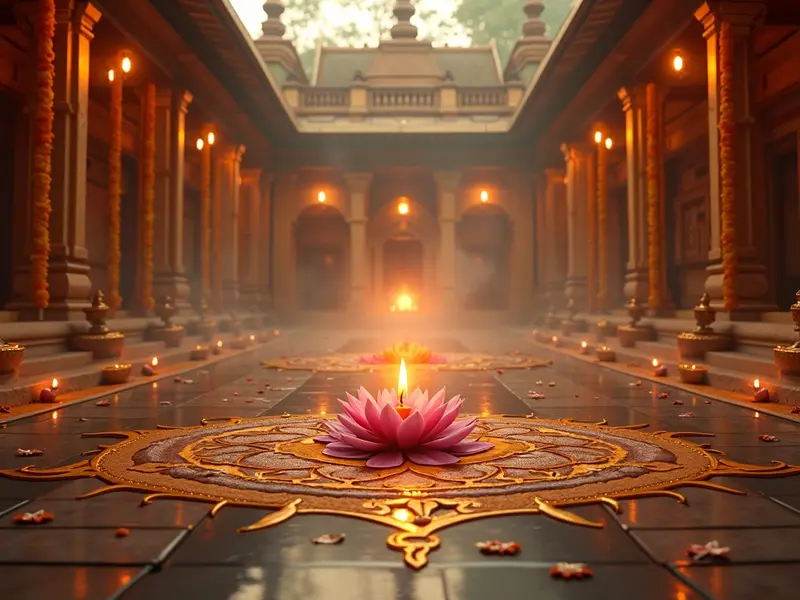
The details of the dream are often said to add shades of meaning. Seeing her seated on a lotus, showering coins, or standing at the threshold of a home is commonly linked to financial ease or a rise in status. Some regional customs say that if she appears smiling or calm, the blessing is considered steady and lasting, while a fleeting glimpse is sometimes read as good fortune that calls for a little patience.
It helps to remember that this is a living tradition passed through generations, not a fixed rulebook. Two families might read the same dream a little differently depending on their own customs, and that variety is part of what makes Swapna Shastra so personal to those who follow it.
In Swapna Shastra and tradition
Reads the appearance of Goddess Lakshmi as one of the most auspicious dream signs, often tied to coming wealth or relief from hardship.
Holds that her darshan in sleep carries a blessing of abundance and grace meant for the dreamer's household, not just the individual.
In many South Asian households, dreaming of her near Diwali or on a Friday, a day associated with her worship, is considered especially meaningful.
Traditional interpreters see this dream as a clear sign of shubh, or auspicious, fortune. It often points to financial relief, a rise in prosperity, or renewed peace at home. Many take her calm presence as reassurance that patience and honest effort are about to be rewarded, and that the household is being watched over with grace.
There is little in Swapna Shastra that treats Lakshmi's appearance as a bad omen. If the dream feels unsettled, such as her turning away or the setting feeling unclear, some traditions gently read this as a nudge to be more mindful with money or gratitude, not as a sign of misfortune to come.
Frequently asked questions
›Is seeing Goddess Lakshmi in a dream good or bad in Hinduism?
In Hindu dream tradition, it is almost always read as good. Swapna Shastra treats her appearance as a sign of coming prosperity, grace, or relief from difficulty. It is one of the few dream images with very little cautionary reading attached, so most interpreters encourage the dreamer to feel reassured rather than worried.
›What does it mean if Goddess Lakshmi smiles at me in a dream?
Traditional belief often links a smiling, peaceful appearance of the goddess with lasting blessing rather than a quick or fleeting one. Some readings say it suggests the good fortune coming your way will be steady, arriving gradually and staying rather than passing through quickly.
›Does dreaming of Lakshmi mean I will get money soon?
Many in the tradition do read it that way, linking her presence to financial ease or an unexpected gain. Others read it more broadly, as a sign of overall abundance, family harmony, or a burden lifting. Swapna Shastra leaves room for both readings, so it is worth sitting with what feels true for your own life.
›Is it significant to dream of Lakshmi on a Friday or during Diwali?
Yes, many regional customs consider this timing especially meaningful, since Friday and the days around Diwali are traditionally associated with her worship. A dream of her during these times is often felt to carry extra weight, though the core meaning of blessing and prosperity stays the same.