
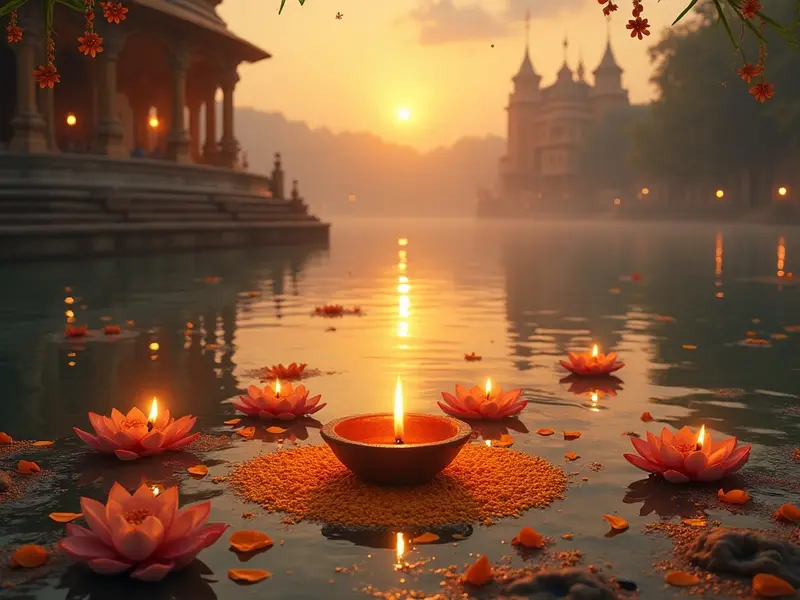
Hindu meaning of the ganga (holy river) in a dream
What Swapna Shastra and traditional belief see in the Ganga.
The Ganga holds a special place in Hindu life as a river considered sacred, and that reverence often carries into how her appearance in a dream is understood. In Swapna Shastra, rivers in general speak to the flow of life, emotion, and time, and the Ganga in particular is associated with cleansing what is old so something new can begin.
Many families read a dream of bathing in the Ganga, or simply standing at her banks, as a sign that the dreamer is being relieved of guilt, stress, or a burden they have been carrying quietly. The water is seen less as a literal place and more as a feeling, a kind of inner washing that the mind offers to itself.
If the river appears calm, wide, and clear in the dream, traditional belief tends to see this as a hopeful sign for peace at home, harmony in relationships, or relief after a difficult period. If the water is fast, flooded, or clouded, some readers say this simply reflects strong emotions moving through the dreamer, not a fixed warning about what is to come.
Dreaming of the Ganga alongside temple bells, a diya, or marigold flowers is sometimes seen as amplifying the sense of blessing, tying the dream to devotion and quiet faith rather than to worry.
In Swapna Shastra and tradition
Reads flowing, clear river water, including the Ganga, as a sign of emotional release and coming good fortune.
Sees bathing in or drinking from the Ganga in a dream as symbolic of being freed from guilt or past mistakes.
In many North Indian households, dreaming of the Ganga near a temple or during a festival season is considered an especially gentle, favorable sign.
Traditional belief often treats a dream of the calm, clear Ganga as auspicious, linked to purification, forgiveness, and inner peace. Some read it as a quiet blessing, a sign that emotional weight is lifting and that better, steadier days may be settling in for the dreamer and their family.
If the Ganga appears turbulent, flooded, or dark in the dream, gentler traditional readings suggest this reflects stress or emotion moving through the dreamer rather than any real danger. It is generally seen as a passing state, not a fixed warning, and is not meant to cause worry.
Frequently asked questions
›Is seeing the Ganga in a dream good or bad in Hinduism?
Most traditional readings lean favorable, especially if the water is calm and clear, since the Ganga is closely tied to purification and blessing. Turbulent water is usually read as a sign of passing emotion rather than misfortune, so the dream is rarely treated as something to fear.
›What does bathing in the Ganga in a dream mean in Swapna Shastra?
Bathing in the Ganga is often described as one of the more comforting dream images, linked to release from guilt, stress, or old regrets. Many see it as the mind's way of signaling relief, a sense of starting fresh after a heavy period.
›Does dreaming of the Ganga mean a blessing from the divine?
Some traditional interpretations do connect a dream of the Ganga with a quiet sense of grace or protection, similar to the feeling of darshan, being in the presence of something sacred. This is usually read gently, as reassurance rather than a specific message or instruction.
›What if the Ganga looks dirty or flooded in the dream?
This is generally not treated as an ill omen in the frightening sense. Traditional readers often see it as reflecting emotional turbulence the dreamer is moving through, with the underlying river itself still carrying its usual association with cleansing and renewal.