
Hindu meaning of fruit in a dream
What Swapna Shastra and traditional belief see in fruit.
Fruit rarely appears as a random detail in Hindu dream lore. Swapna Shastra tends to read it as a symbol of accumulated effort, karma, or intention finally coming to fruition, quite literally. A tree bearing fruit in a dream is often connected to family growth, financial gain, or a long-awaited outcome arriving.
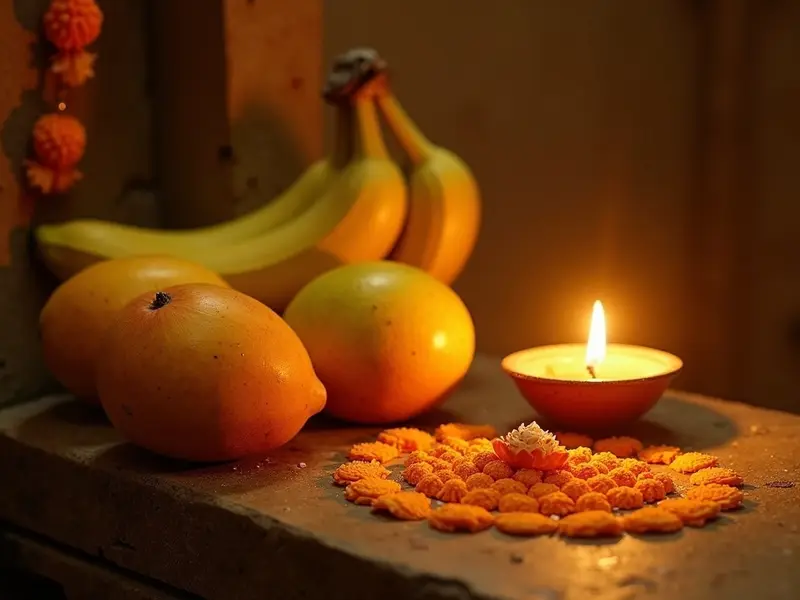
The type and state of the fruit matters in traditional interpretation. Ripe, sweet, or golden fruit is usually linked to good fortune, abundance, and health. Mangoes, coconuts, and bananas carry extra warmth in Indian custom, since they appear in poojas and are already associated with auspicious beginnings, weddings, and offerings to the divine.
Even fruit that looks less pleasant, like something overripe, bruised, or fallen to the ground, is not always read as a bad sign. Many traditional readers see this as a gentle nudge about timing, suggesting that something in the dreamer's life is ready to be acted on before it passes, rather than a warning of loss.
Dreaming of offering fruit to a deity or receiving it during darshan is considered especially meaningful. Traditional belief holds that this reflects grace, protection, or a quiet blessing settling over the dreamer's home and efforts, without needing anything dramatic to happen in waking life for it to hold meaning.
In Swapna Shastra and tradition
Reads fruit broadly as a sign of reward, fertility, or effort reaching completion.
Sweet or ripe fruit is linked to prosperity and good health; the fruit's freshness often shapes the reading.
Fruit offered to a deity or elder in a dream is widely seen as a sign of blessing and family harmony.
Ripe, colorful, or abundant fruit is traditionally seen as one of the more welcome dream images in Hindu lore. It's often connected to prosperity, successful ventures, good health, or a family blessing on its way. Offering or receiving fruit near a deity or elder is considered especially favorable, hinting at quiet, steady grace.
Rotten or fallen fruit isn't usually read as frightening in this tradition, more as a gentle reminder about timing. Some traditional readings suggest an opportunity needs attention soon, or that something in the dreamer's life has been left unattended. It's rarely treated as a warning of real loss, just a soft nudge to notice and act.
Looking for the everyday, psychological read too? See the general dream meaning of fruit →
Frequently asked questions
›Is seeing fruit in a dream good or bad in Hinduism?
Traditional belief generally leans favorable. Fruit is often tied to prosperity, health, or effort finally paying off. Ripe, sweet fruit tends to be read as especially auspicious. Even less pleasant versions, like overripe fruit, are usually treated gently, more as a timing signal than a bad omen.
›What does it mean to dream of eating fruit, according to Hindu tradition?
Eating fruit in a dream is often linked in Swapna Shastra to receiving the reward of past effort, whether that's emotional, financial, or related to family life. Many traditional readers see it as a sign that something the dreamer has worked toward is close to being enjoyed.
›Does the type of fruit matter in Hindu dream interpretation?
Yes, many traditional readings pay attention to the specific fruit. Mangoes, coconuts, and bananas often carry extra warmth because of their role in poojas and celebrations, while unfamiliar or exotic fruit may be read more loosely, simply as a sign of unexpected good fortune.
›What does it mean to offer fruit to a god in a dream?
This image is widely considered a gentle and reassuring one. Traditional belief holds that offering fruit to a deity in a dream reflects devotion, gratitude, or a quiet blessing settling over the dreamer, often connected to peace at home or protection for the family.