
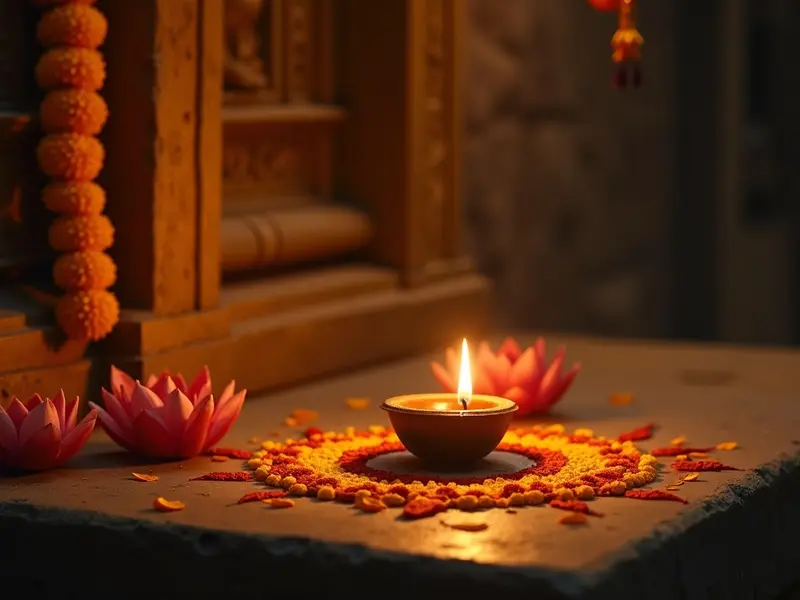
Hindu meaning of a diya (oil lamp) in a dream
What Swapna Shastra and traditional belief see in a lit diya.
A diya is one of the oldest images of hope in Indian tradition, so dreaming of one lit and steady is usually felt as a comforting sign. In Swapna Shastra, flame and light are almost always tied to knowledge, life force, and the presence of something sacred watching over the dreamer.
Traditional belief holds that a diya burning quietly and without flickering points toward stability coming into your life, whether that means peace at home, progress at work, or simply a calmer mind after a hard stretch. Many families treat this as one of the more reassuring dreams a person can have.
The condition of the flame matters in how people read the dream. A tall, steady flame is widely taken as a sign of clarity and blessing, almost like a quiet 'yes' after a period of doubt. A flame that dances, dims, or struggles against wind is read a little more gently, as a nudge to protect your peace, your health, or an important relationship rather than as any kind of bad news.
Because the diya is lit for gods, ancestors, and important beginnings, many see this dream as connected to remembrance and gratitude, perhaps a sign that someone is thinking of you, or that you are being asked to slow down and honor what already brings you light.
In Swapna Shastra and tradition
Reads a steadily lit diya as a classic sign of good fortune, clarity, and spiritual protection entering the dreamer's life.
Holds that a flame growing brighter in the dream mirrors rising confidence, success, or the resolution of a worry in waking life.
In many households, dreaming of lighting a diya, especially near a deity or during a festival, is treated as an invitation to say a quiet prayer of thanks the next morning.
A lit diya is widely seen as one of the kindest dream symbols in Hindu tradition. Many take it as a sign of blessings arriving, obstacles softening, or a period of clarity and peace after confusion. It can also feel like quiet reassurance that you are supported, seen, and gently watched over.
If the flame flickers, gutters, or nearly goes out, tradition treats this less as a warning and more as a soft reminder. It can suggest you are being asked to protect your energy, your health, or a bond that matters, and to tend to it the way you would shield a flame from the wind, with patience rather than worry.
Frequently asked questions
›Is seeing a lit diya in a dream good or bad in Hinduism?
It is almost always read as good. Swapna Shastra and family tradition generally treat a lit, steady diya as a hopeful sign, linked to blessings, clarity, or a hard time easing up. Even when the flame flickers, the reading tends to stay gentle, more of a nudge to take care than any real cause for worry.
›What does it mean if the diya's flame is very bright in the dream?
Many take a bright, steady flame as a sign of strong blessings or good news on the way. It is often linked to clarity of mind, success in something you have been working toward, or a feeling of protection surrounding you and the people you love.
›What if I dream of the diya going out?
Traditional readings tend to be soft here rather than alarming. It is often taken as a gentle sign to slow down, rest, or pay closer attention to your health or an important relationship, more of a reminder to protect what matters than a warning of loss.
›Does dreaming of lighting a diya for God have special meaning?
Yes, many see this as an especially tender dream. It is often read as a moment of quiet connection or gratitude, sometimes felt as being seen or blessed, and families may treat it as encouragement to keep faith, patience, or a daily prayer practice close.