
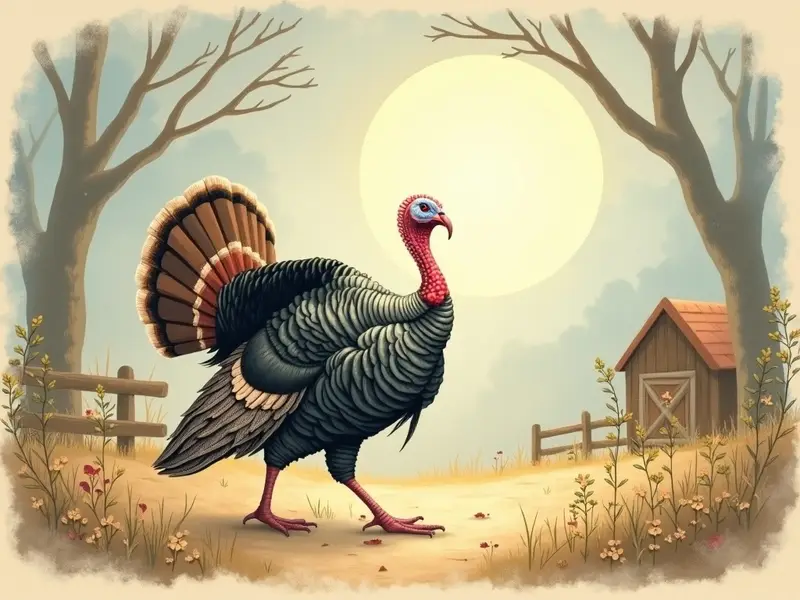
Injured turkey dream: what does it mean?
An injured turkey dream shifts the usual meaning of abundance and gathering into something more tender: a sense that your ability to provide or celebrate feels hurt, strained, or at risk.
Dreaming of “turkey” with a detail
A plain turkey in a dream usually points to plenty, gratitude, or the comfort of gathering with people you care about. Add an injury, and the meaning tilts toward vulnerability. Something connected to nourishing others, hosting, or feeling capable now feels wounded or unsteady.
This can show up when you're worried about falling short during a holiday, family event, or time when others are counting on you. It may also reflect concern about your own health, energy, or resources feeling depleted just when you want to give generously.
This dream can also mean you're aware of a strain before it becomes serious, which gives you a chance to rest, ask for help, or adjust plans. Noticing the injury in the dream often means your instincts are healthy and protective.
Watch for pushing yourself to host, provide, or please everyone while ignoring your own limits. The injured turkey may be a gentle nudge that overextending yourself now could leave you feeling drained during a moment meant to be joyful.
More like this: all dreams about animals →


Frequently asked questions
›What does it mean to dream about an injured turkey before Thanksgiving?
It often reflects pre-holiday stress, worry about hosting duties, or fear that plans won't go smoothly. It's less about the holiday itself and more about pressure you feel to make things perfect for others.
›Does an injured turkey in a dream mean bad luck?
No. Dreams like this aren't predictions. It usually points to feelings of strain or vulnerability around providing or celebrating, not an actual warning about the future.
›Why do I keep dreaming about a hurt turkey?
Repeated dreams like this often mean an ongoing concern, like feeling responsible for others' comfort, hasn't been resolved. It may ease once you address the stress or expectations behind it.