
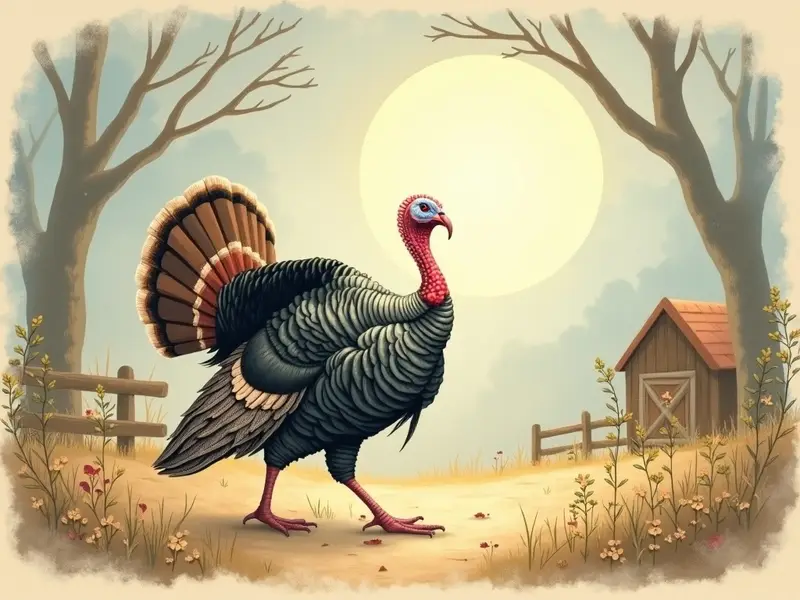
Green turkey dream: what does it mean?
A green turkey dream takes the familiar symbol of abundance and Thanksgiving-style gathering and tints it with the meanings of green: growth, money, envy, or something that feels slightly artificial.
Dreaming of “turkey” with a detail
Turkeys in dreams often connect to gratitude, family gatherings, and a feeling of plenty. Adding green shifts the tone. Green is the color of new growth and cash, so a green turkey can hint that abundance is coming, or that you're thinking about money alongside family or social obligations.
But green can also mean envy or 'too good to be true.' Since turkeys aren't naturally green, your mind may be flagging that a plentiful situation, a job offer, a relationship, a windfall, feels off, forced, or worth a second look before you fully trust it.
This dream can reflect real growth on the horizon, financial relief, or an abundant season in your life. It may also mean you're finally feeling generous or grateful without resentment, ready to enjoy what you have instead of comparing it to others.
Watch for feelings of envy toward someone else's success, or a sense that a good situation feels staged or unnatural. The unusual color can also mirror mild unease about money tied to family gatherings or obligations you feel pressured to meet.
More like this: all dreams about animals →


Frequently asked questions
›What does a green turkey mean in a dream about money?
It often suggests financial growth or a windfall connected to gratitude or family, since green ties strongly to money themes while the turkey represents abundance and shared plenty.
›Why would I dream of a green turkey instead of a normal one?
The unusual color often means your mind wants to highlight something, like envy, growth, or a nagging sense that a plentiful situation isn't fully genuine, that a plain turkey dream wouldn't capture.
›Does a green turkey dream mean something bad?
Not at all. It's more of a nudge to notice mixed feelings, like excitement about abundance alongside envy or doubt, rather than a warning sign.