
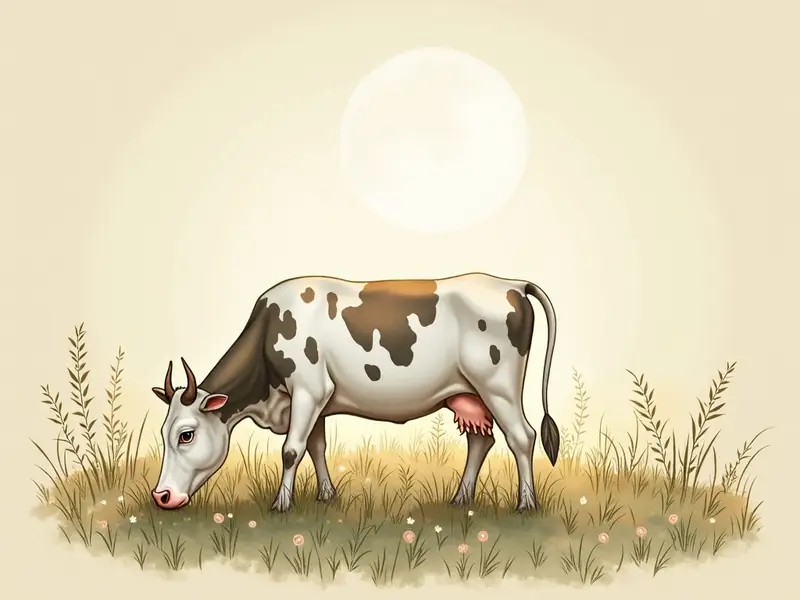
Biting cow dream: what does it mean?
Biting cow dreams take the usual calm, patient symbol of a cow and add a jolt of aggression, which changes the whole meaning of the dream.
Dreaming of “cow” with a detail
A plain cow dream tends to speak of patience, steady support, or quiet abundance. Add a bite, and the story shifts. Something gentle in your waking life, maybe a relationship, a routine, or your own tolerance, has been strained past its comfort zone and is finally reacting.
The bite often represents a boundary you or someone else has been too polite to state out loud. Cows rarely bite unless they feel cornered or provoked, so this dream can reflect a slow-building frustration, perhaps yours, perhaps someone else's, that's ready to surface.
This dream can be a healthy signal that you're finally recognizing a limit that needed naming. It may show growing self-respect, an inner readiness to speak up, or relief that a long-simmering tension is finally being acknowledged instead of ignored.
It may point to built-up resentment, either your own or from someone close to you, that hasn't found a calm outlet yet. If the bite felt frightening, it might reflect worry about a relationship or situation turning unpredictable if it stays unspoken.
Spiritual, biblical & cultural meaning
More like this: all dreams about animals →


Frequently asked questions
›What does it mean when a cow bites you in a dream?
It usually reflects a boundary being tested or crossed in waking life. Something you've tolerated patiently, a relationship, workload, or personal limit, may be reaching its breaking point and asking for direct attention rather than quiet endurance.
›Is a biting cow dream a bad omen?
No. It's less a bad sign and more an emotional alert. It often means built-up tension wants acknowledgment. Facing the issue calmly usually resolves the feeling faster than worrying about the dream itself.
›What's the spiritual meaning of a cow biting you in a dream?
Some see cows as symbols of patience and provision, so a bite in that context is sometimes read as a gentle warning that grace or generosity is being taken for granted. It's viewed as an invitation to restore balance, not a punishment.