
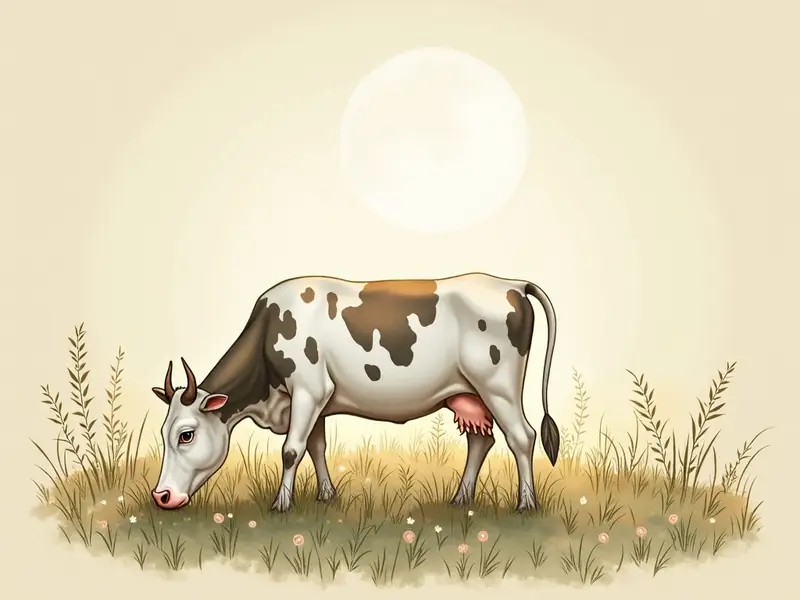
Sick cow dream: what does it mean?
A sick cow dream shifts the usual meaning of cows as steady providers into a warning that some source of nourishment, income, or care in your life feels fragile or overlooked.
Dreaming of “cow” with a detail
Cows in dreams often stand for steady provision, patience, and quiet abundance. When the cow appears sick, that sense of reliability gets shaken. Your mind may be flagging a resource, relationship, or routine that once felt dependable but now seems drained or strained.
This can show up during times of financial worry, caregiving fatigue, or when your own health or energy feels lower than usual. The sick cow isn't a bad omen so much as a nudge—something that normally sustains you is asking for attention before it can fully recover.
This dream can mean you're noticing a problem early, while there's still time to help. Catching the 'sickness' in your dream life often reflects real-world awareness—you sense a weak spot in your finances, health, or support system before it becomes serious.
It may reflect fear of loss—worry that money, energy, or a caregiving role is being stretched too thin. If the cow looks very weak or dying, it can mirror exhaustion or a sense that you're pouring out more than you're getting back right now.
Spiritual, biblical & cultural meaning
More like this: all dreams about animals →


Frequently asked questions
›What does a sick cow in a dream mean spiritually?
In a spiritual sense, some see a sick cow as a gentle call to care for what sustains you—faith, health, or relationships. It's often read as encouragement to slow down and restore balance rather than as a warning of harm.
›Does dreaming of a sick cow mean bad luck?
Not necessarily. It's less about luck and more about attention. The dream often points to a specific area of life—money, health, or caregiving—that feels weakened and could use some care or reassessment soon.
›Why did I dream about a dying cow specifically?
A dying cow can reflect fear of losing something you rely on, like income or a steady relationship. It usually points to anxiety about loss rather than predicting an actual event, and often eases once the underlying worry is addressed.