
Why you jolt awake as you fall asleep
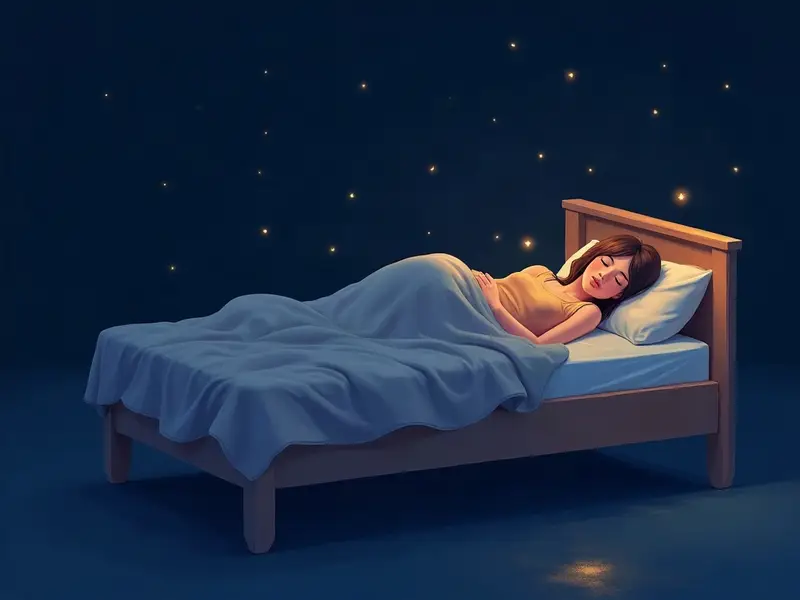
It happens in the first minutes of sleep, often on the nights you are most tired. Your thoughts are loosening, the room is drifting away, and then your body lurches as if you missed a step on the stairs. Sometimes there is a flash of a dream to go with it: a kerb, a cliff edge, a sudden drop. Sometimes there is just the jolt. You are awake again, heart pounding, feeling slightly foolish. That is a hypnic jerk, also called a sleep start, and it is the second most searched "falling dream" experience in English after the dream itself.
What a hypnic jerk is
A hypnic jerk is a sudden, brief, involuntary contraction of one or more muscles, usually the legs, arms or whole body, that happens as you cross from wakefulness into sleep. It belongs to a family of movements sleep physicians call sleep starts. It is not a seizure and not a sign that anything is wrong with your nervous system; it is classified as a normal sleep phenomenon that almost everyone experiences at some point.
The jerk is often accompanied by a sensation, and that is what makes it memorable: a feeling of falling, tripping or dropping, a flash of light, a loud snap or bang that nobody else heard, or a short, vivid dream fragment that explains the fall after the fact. Many people also notice a racing heart and quicker breathing immediately after, which is the body's startle response catching up with what just happened.
Estimates of how many people experience hypnic jerks run as high as 60 to 70 percent, and most of those people have them only occasionally. They can happen at any age. Babies have them, which is one reason a swaddled newborn sleeps more soundly, and so do older adults. In other words, if you have one tonight, you will be doing something completely ordinary.
Why it happens: three explanations
The honest answer is that researchers do not fully know, and a 2015 review of the scientific literature on hypnic jerks said as much. There are, however, three explanations that fit the evidence reasonably well, and they are not mutually exclusive.
The first is a hand-off problem. Falling asleep is not a switch but a negotiation between the systems that keep you alert and the systems that shut the body down. As your muscles relax and your breathing slows, the part of the brainstem that controls arousal can misread the sudden drop in muscle tone as a sign that you are collapsing, and fire a quick burst of movement to catch you. The jerk is the catch.
The second is the startle reflex misfiring. The same brainstem region that produces a hypnic jerk also produces your startle response, the one that makes you flinch at a slammed door. At sleep onset, with the usual filters half switched off, an internal signal can trigger it for no external reason.
The third is an evolutionary story, and it should be held loosely because it cannot be tested. The idea is that for a primate falling asleep in a tree, a reflex that jerks the body awake when the muscles go slack would have been worth keeping. It is a tidy explanation for why the sensation is so often one of falling, but it remains a hypothesis, not a finding.
Why a dream of falling so often comes with it
The brain does not like events without explanations. When a physical jolt arrives during the drowsy, image-rich minutes of sleep onset, the mind supplies a scene that accounts for it: a missed step, a ledge, a lift dropping. Because the jerk and the image arrive together, it feels as though the dream caused the fall. More likely it was the other way round, or the two happened at once, with the dream assembled in the fraction of a second it takes the body to react.
This matters for how you read the experience. A hypnic jerk with a falling image is not the same as a falling dream that unfolds in the middle of the night during REM sleep. The first is a reflex with a caption. The second is a full dream, and the one most people are asking about when they search for the meaning of falling in a dream. If you want the symbolic side, our entry on falling dreams covers it; this article is about the jolt.
What makes hypnic jerks more frequent
Anything that keeps the alert system running while the body is trying to shut down. The usual suspects are caffeine late in the day, nicotine, intense exercise in the evening, emotional stress and anxiety, and above all sleep deprivation. Tired people fall asleep faster and harder, and the hand-off between waking and sleeping becomes more abrupt, which seems to give the jerk more room to happen. Irregular schedules and shift work have the same effect.
Some medications are associated with more frequent jerks, including certain antidepressants and stimulants; a handful of recent case reports describe sleep starts appearing or intensifying after a new prescription and settling once it was adjusted. If yours began with a new medicine, that is worth mentioning to the person who prescribed it, not a reason to stop taking it on your own.
There is also a loop, the same one that haunts sleep paralysis. If a jerk startles you badly, you may lie there tense, waiting for the next one, which keeps you in exactly the drowsy, half-alert state where jerks happen. People who get caught in that loop sometimes find that the hour before bed becomes a source of dread. Knowing that the jolt is harmless is the first step out of it.
How to have fewer of them
Nothing stops hypnic jerks completely, and nothing needs to. But the things that reduce them are the things that improve sleep generally. Give yourself enough time in bed and keep the schedule steady; a well-rested brain makes a smoother transition. Move caffeine to the morning and finish hard exercise at least a few hours before bed. Let the evening wind down gradually rather than going from a bright screen straight to a dark room.
If stress is the driver, a short routine that signals the day is over helps more than willpower: a few minutes of slow breathing, stretching, or writing down tomorrow's worries so your mind can put them down. Some people find that a slightly cooler room and a heavier blanket reduce the startle. If you drift off on the sofa and jerk awake, that is often a sign you are more sleep deprived than you think; the fix is an earlier bedtime, not a different sofa.
When a jolt is worth a conversation with a doctor
Ordinary hypnic jerks need no treatment. A few situations deserve a closer look. If the jerks happen many times a night, every night, and keep you from falling asleep at all. If they continue after you are fully asleep, or your partner notices rhythmic leg movements through the night, which points toward a different condition called periodic limb movement disorder. If a movement is ever accompanied by confusion, tongue biting or loss of bladder control, which are not features of a sleep start. And if the jerks began alongside a new medication.
For everyone else, the jolt that catches you on the edge of sleep is one of the body's oldest reflexes doing a slightly clumsy job. It will pass in a second, the heart will settle, and the next attempt at sleep almost always succeeds.
See also in the dictionary
Frequently asked questions
›Why do I feel like I'm falling when I fall asleep?
As your muscles relax at sleep onset, the brain can misread the sudden loss of muscle tone as a real fall and trigger a quick contraction to catch you. The falling sensation and any brief dream image are the mind's explanation for that jolt.
›Are hypnic jerks dangerous?
No. They are classified as a normal sleep phenomenon. The only common consequences are a racing heart for a minute and, occasionally, a bumped elbow. Very frequent jerks that stop you sleeping, or movements that continue during sleep, are worth discussing with a doctor.
›Is a hypnic jerk the same as a falling dream?
Not quite. A hypnic jerk is a reflex at the edge of sleep, sometimes with a flash of a falling image. A falling dream is a full dream during REM sleep later in the night. People searching for the meaning of falling dreams are usually asking about the second one.
›Why do I get them more when I'm exhausted?
Sleep deprivation makes you fall asleep faster and more abruptly, so the transition from waking to sleep is rougher and the arousal system is more likely to misfire. Catching up on sleep is the most reliable way to have fewer jerks.
›Can caffeine cause hypnic jerks?
It can make them more likely. Caffeine, nicotine and other stimulants keep the alert system active while the body tries to shut down, which is exactly the mismatch behind the jerk. Keeping caffeine to the morning helps many people.