
Why Your Dreams Get Weirder (and More Vivid) During a Heat Wave
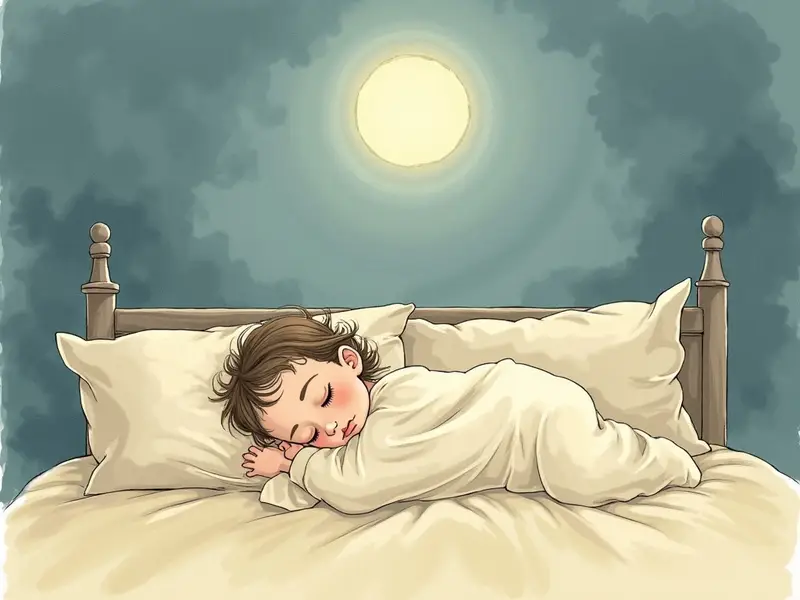
You wake up at 3 a.m. tangled in damp sheets, heart pounding from a dream you can recall in strange detail. If this summer's heat has left your nights stranger than usual, your body is telling you something real about how warmth and sleep interact.
The Heat-Dream Connection: What's Actually Happening in Your Brain
Sleep is not a single, steady state. Your body moves through cycles of light sleep, deep sleep, and REM sleep several times a night, and each stage handles temperature differently. During REM, the stage most associated with dreaming, your body's usual cooling tools largely shut down. REM sleep, the stage of sleep associated with vivid dreaming, is uniquely vulnerable to heat because your body's main temperature-control systems are mostly switched off during this stage, and responses like sweating or shivering are strongly blocked.
That timing is unlucky, because REM is also when the brain does some of its most demanding work. As one sleep clinic puts it, it's as if your brain decides that the intense work of dreaming and memory consolidation is so important that it temporarily diverts resources away from other tasks, including managing body temperature. In a cool room, this trade-off barely matters. In a bedroom stuck at 82 degrees at midnight, it becomes a real conflict between what your body needs and what it can actually do.
Normally, falling asleep depends on a gentle drop in core body temperature. Sleep researchers describe this shift clearly: the reason people experience more vivid dreams during hot weather has to do with the relationship between body temperature and sleep stages, since body temperature naturally dips by around one degree Celsius when we sleep, signaling to the brain that it's time for rest. During a heat wave, that signal gets muddled. On muggy nights when temperatures barely drop, this cooling process is disrupted, and the body works harder to regulate temperature, which can lead to restless or fragmented sleep.
Why You Suddenly Remember Every Strange Detail
Here's the part that surprises a lot of people: heat doesn't necessarily create dreams out of nowhere. It mostly changes whether you remember the ones you're already having. Hot weather makes it more likely that you'll remember your dreams after you wake up, because warmer temperatures can result in more awakenings from sleep, during which dreams may be remembered, even though fragmented sleep itself is far from ideal.
Sleep specialists describe these brief interruptions as micro-awakenings, tiny moments of semi-consciousness that happen most often during REM. According to a sleep expert quoted in recent heat wave coverage, during hot periods people may experience more of these micro-awakenings, brief moments of semi-consciousness, most often during the REM stage of sleep, when most dreaming takes place. Waking briefly right in the middle of a dream is exactly the situation that makes dream content stick, since we're waking up more often during this phase and more likely to remember our dreams in detail, while mild thermal stress can make those dreams more fragmented, surreal, and emotionally charged.
So the dream you had last January in a cozy, cool bedroom may have been just as strange. You simply slept through it without waking up long enough to file it into memory. Summer heat interrupts sleep at the exact moment dreams are being formed, which is why July and August so often feel like the season of unforgettable, slightly off dreams.
Bizarre, Vivid, Sometimes Unsettling: The Science Behind It
It isn't only about remembering more. Heat also appears to change the actual texture of dreams, making them more disjointed and emotionally intense. Researchers studying fever, which produces a related kind of internal heat, have found a similar pattern. In an online study of dream reports, researchers found that fever dreams were more bizarre and more negatively toned and included more references to health and temperature perception compared to normal recent dreams, findings in line with the continuity hypothesis of dreaming. Common threads in these heat-influenced dreams included spatial distortions such as moving walls, creatures with over-sized arms and legs, and threats like dogs, spheres, or insects.
Sleep researcher Dr. J. Allan Hobson of Harvard Medical School has pointed to a two-way relationship between temperature and REM, noting that REM sleep is essential to temperature control, and fever suppresses REM. When that regulation gets thrown off, the logic connecting one dream scene to the next seems to loosen as well, which may explain why heat-soaked dreams often feel like they're skipping between half-finished stories.
None of this means a strange or unsettling dream is a warning sign. It reflects an overworked thermostat and a brain doing its best to process a hot, restless night. Dreams tied to heat tend to ease up once the body cools down and sleep evens out again.

This Summer's Heat Waves Are Testing Everyone's Sleep
If your dreams have felt unusually charged lately, the timing lines up with a genuinely rough summer for sleep. Large parts of the country have spent recent weeks under a heat dome, with forecasters warning of triple-digit highs across the Southwest and Great Plains, spreading eastward under a dome of high pressure that could trap oppressive temperatures for a week or more, with nighttime temperatures running well above normal in many areas.
That overnight heat matters more than the daytime peak. Meteorologists have noted that roughly two-thirds of the temperature records expected to fall in recent weeks are overnight heat records, with lows staying above 80 degrees in several southern cities.
Earlier in the season, an intense heat dome pushed cities like Washington, D.C. and Baltimore to within a few degrees of their all-time record highs. Heat like this doesn't stay outside once the sun goes down. It seeps into bedrooms that were never designed for these temperatures, which is exactly why so many people are waking up mid-dream this year rather than sleeping through the night the way they usually do.
Cooling Down Before Bed: Practical Ways to Sleep Steadier
The good news is that small, consistent habits can lower how much a hot night disrupts your sleep, even without central air conditioning. Timing matters more than most people expect. Body temperature is usually highest in the early evening, and as the body starts preparing for sleep, core temperature naturally drops while melatonin rises, so the body pushes heat out through the skin toward the hands and feet. Anything that helps this natural cooling along, rather than fighting it, tends to help.
Simple daytime choices make a real difference before you ever get into bed. Experts recommend keeping curtains or blinds closed on sun-facing windows during the day to reduce sunlight entering the room and heating up floors, walls, and furniture. Windows deserve some strategy too, since opening them when outside air is hotter than inside can bring more heat in, so it's better to open windows when the outside air is cooler, often in early morning or evening.
Bedding and sleepwear play a bigger role than people often assume. Light, loose sleepwear and bedding help the body lose heat, with cotton and linen often working well because they absorb moisture and allow air movement, while heavy bedding and tight synthetic fabrics trap heat. A cool shower before bed can also help ease the body toward sleep rather than shocking it awake, and a fan positioned to move air across the skin, rather than blast directly at the face all night, can make a stuffy room noticeably more bearable.
A Gentle Reminder About Strange Dreams
A vivid, odd, or unsettling dream during a heat wave is not a message you need to decode or a problem you need to fix. It is your sleeping brain adjusting to a body that is working overtime to stay cool.
Once temperatures ease and your room settles back into a comfortable range, most people find their sleep, and their dreams, return to their usual rhythm without any lasting effect. Until then, a cooler pillow and an earlier bedtime routine may be the kindest thing you can offer your dreaming mind this summer.
See also in the dictionary
Frequently asked questions
›Does hot weather actually cause nightmares, or just make me remember them?
Both play a role. Heat increases how often you briefly wake during REM sleep, which boosts recall, and research on fever-related dreaming suggests warmth can also make dream content itself more bizarre and emotionally intense.
›What is the ideal bedroom temperature for sleep during summer?
Recommendations vary slightly, but sleep researchers generally suggest a range between the mid-60s and low 70s Fahrenheit, with most guidance pointing toward 65 to 68 degrees as comfortable for most sleepers.
›Why do I wake up more often when my room is hot?
Your body's cooling systems, including sweating, are largely suppressed during REM sleep, so when a room is too warm, your body has fewer tools to regulate temperature and is more likely to briefly rouse you awake.
›Should I be worried if my dreams feel unusually strange during a heat wave?
Not typically. Odd or vivid dreams during hot weather usually reflect fragmented sleep rather than anything concerning, and they tend to settle back to normal once the room cools and sleep becomes steadier.
›Can a fan alone help me sleep better in extreme heat?
Fans can help by moving air across your skin so sweat evaporates more efficiently, making you feel cooler, though in very high heat or humidity a fan alone may not be enough for everyone, especially older adults.
- Does Hot Weather Give You Anxiety Dreams? 7 Ways to Cool Down - Healthline
- Sleep expert reveals why you have 'surreal' dreams in a heatwave - HELLO!
- Sleep And Heat: Why Is It Hard To Sleep When It's Hot? - The Better Sleep Clinic
- Fever Dreams: An Online Study - PMC
- The Science Behind Fever Dreams - TIME
- Keep your cool - and stay healthy - with these hot-weather sleep tips - American Heart Association
- Eight ways to sleep well in hot weather - The Conversation
- Hottest temperatures in over a decade threatened in parts of eastern US - CNN