
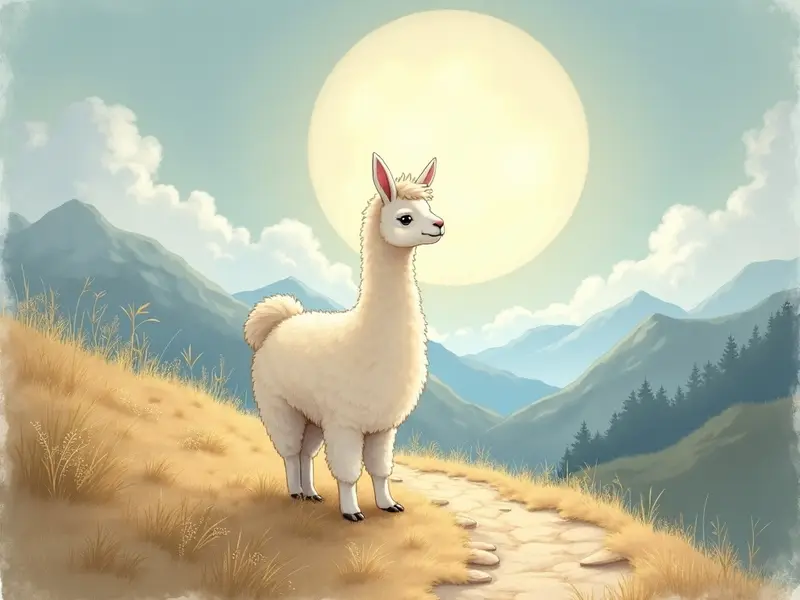
Young llama dream: what does it mean?
A young llama in a dream shifts the focus from steady independence to fresh beginnings. Where an adult llama suggests self-reliance already earned, a baby or young one points to something still growing and in need of patience.
Dreaming of “llama” with a detail
A young llama often reflects a new venture, idea, or relationship that hasn't matured yet. It might be a job you just started, a skill you're building, or a part of your personality you're only beginning to trust. The dream captures that in-between stage: not helpless, but not fully steady either.
This image can also point to innocence or vulnerability you're protecting, in yourself or someone close to you. Because llamas are naturally wary but gentle, a young one in a dream can represent something tender that needs a calm, patient hand rather than pressure to grow up fast.
This dream can signal healthy new beginnings, creative potential, or the early stages of confidence forming. It may reflect optimism about something you're nurturing, whether a relationship, a goal, or a new version of yourself still taking shape.
If the young llama seemed anxious, lost, or in danger, it may echo your own worry about being unprepared or unsupported. It can also point to impatience, wanting something to mature faster than it realistically can.
More like this: all dreams about animals →


Frequently asked questions
›What does a young llama dream mean spiritually?
Some see a young animal in dreams as a symbol of new spiritual growth or a fresh season of faith. It can suggest being gently guided rather than expected to have all the answers right away.
›Does dreaming of a young llama mean I'm starting something new?
Often, yes. It commonly reflects a project, relationship, or personal change that's still in its early stages, where patience and care matter more than speed or certainty.
›Why did I dream about a young llama instead of an adult one?
Dreams often pick a young animal to highlight vulnerability or potential rather than the stability an adult would suggest. It points to something forming, not yet fully developed or tested.