
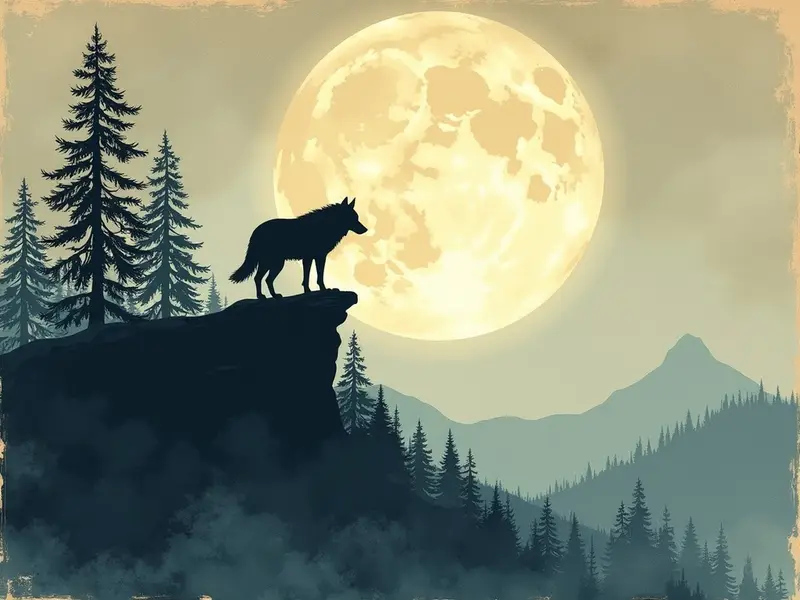
A werewolf dream: what does it mean?
A werewolf padding through your dream is rarely just a monster movie leftover. It's a stand-in for the parts of yourself you keep on a leash during the day.
Dreaming of “a werewolf” with a detail
Werewolves live in that uneasy space between human and animal, civilized and wild. When one shows up in your dream, your mind is often pointing at a similar split inside you — the version of yourself that shows up to work, keeps the peace, and says the right thing, versus the version that wants to snap, growl, or just tell the truth for once.
A lot of these dreams cluster around moments when you're under real restraint in waking life. Maybe you're biting your tongue in a relationship, holding in resentment at your job, or pushing down a want you feel embarrassed about. The moon in werewolf lore is a nice detail here too, since it suggests something cyclical, a pressure that builds and builds until it has to come out.
Not every werewolf dream is about anger, though. Sometimes it's about appetite in a broader sense: sexual energy, ambition, hunger for more out of life. American dreamers especially seem to have these dreams during stretches of overwork or people-pleasing, when the 'good' self has been running the show for too long without a break.
The specific role you play in the dream matters a lot. Watching a werewolf from a distance feels different than becoming one, and both are covered in the sections below.
A werewolf dream can be a healthy signal that buried energy, passion, or honesty is finally pushing to the surface. It may mean you're ready to stop over-controlling yourself, set a boundary you've been avoiding, or let a more confident, instinct-driven side of you finally speak up.
Pay attention if the werewolf feels purely terrifying or out of control, especially if it's hurting people you care about in the dream. That can reflect real fear about your own temper, a habit, or a desire you're ashamed of, rather than something to act on right away.
Spiritual, biblical & cultural meaning
In folklore, the werewolf often symbolizes the struggle between conscience and impulse. Some Christian readings connect it loosely to the idea of wrestling with a 'lower nature,' though never as condemnation — more a nudge to bring hidden feelings into the light instead of hiding them.
More like this: all dreams about danger, emotions and events →
Frequently asked questions
›What does it mean to dream about a werewolf chasing you?
This often reflects an emotion or truth you're avoiding rather than facing head-on. The chase suggests that whatever you're suppressing — anger, desire, a hard conversation — has enough energy that it's starting to catch up with you in your sleep.
›Is dreaming about a werewolf a bad omen?
No, dream symbols like this aren't predictions of bad luck. A werewolf usually reflects something happening inside you right now, like buried frustration or hidden instinct, and understanding it can actually be useful rather than something to fear.
›Why do I keep having recurring werewolf dreams?
Recurring dreams often mean the underlying issue hasn't been resolved yet. If a werewolf keeps appearing, it may be worth gently exploring what part of your life still asks you to stay 'tame' when you're feeling anything but.
›Does a werewolf dream mean I have anger issues?
Not necessarily. It more often means you're actively managing strong feelings, which is a sign of self-awareness, not a problem. The dream is simply flagging that the pressure exists and deserves a healthier outlet.