
Trunk dream: what does it mean?
A trunk in a dream draws your attention to what's holding you up. Whether it's thick and solid or cracked and bare, it often mirrors how steady you feel at your core right now.
Trees show up in dreams as symbols of growth, family, and the passage of time, and the trunk is the part that carries the whole weight of that growth. When your mind puts a trunk front and center, it's often asking you to notice what's supporting you, whether that's your health, your finances, your relationships, or simply your sense of who you are.
A wide, healthy trunk usually reflects confidence and staying power. You might be going through a season where you feel capable of handling whatever comes, even if branches sway or leaves fall around you. The trunk stands firm, and that steadiness in the dream often matches steadiness you feel in real life.
A thin, rotting, or hollow trunk can point to a different feeling: a sense that something foundational needs attention. This isn't a warning of disaster. It's more often your mind flagging stress, exhaustion, or a support system that feels thinner than you'd like, nudging you to shore things up before they feel more urgent.
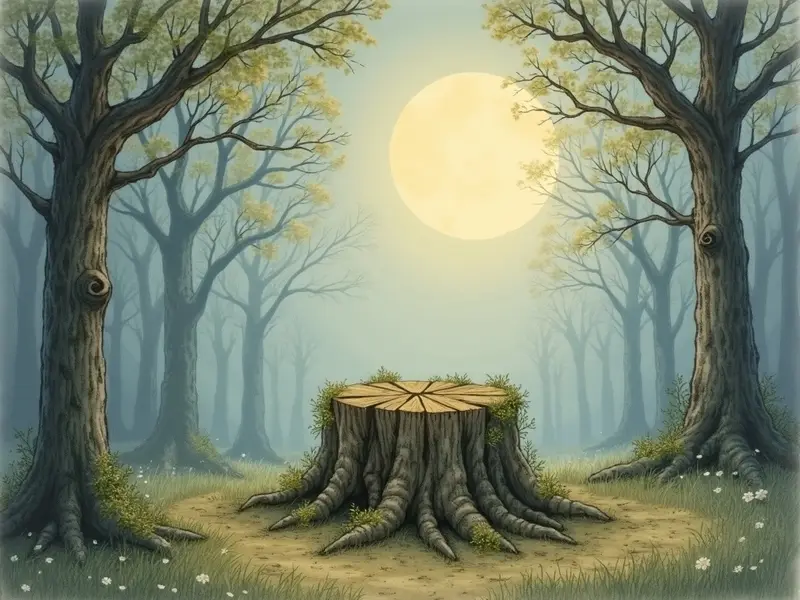
Sometimes a trunk appears cut down or freshly exposed, showing its rings. This can reflect looking back at your own history, taking stock of years passed, choices made, and how they've shaped the person you are now.
A strong, rooted trunk in a dream is a good sign. It often shows up when you feel emotionally steady, financially secure, or confident in your relationships. It can also appear during times of quiet personal growth, reflecting a sense that you're building something lasting and dependable in your life.
If the trunk was cracked, hollow, or leaning, it may be worth checking in on your energy levels or support system. This isn't a sign of doom, just a gentle nudge that something foundational, like rest, finances, or a key relationship, might need a little reinforcement or care soon.
Spiritual, biblical & cultural meaning
In a spiritual sense, trees and their trunks are often linked to steadfastness and faith that stays rooted through changing seasons. Some biblical readings connect a strong trunk to a life anchored in something greater than circumstance, while a withering one can gently symbolize a season calling for renewal or reflection.
More like this: all dreams about nature and weather →

Frequently asked questions
›What does it mean to dream about a tree trunk specifically?
A tree trunk in a dream usually symbolizes your personal foundation, meaning your inner strength, stability, and the values or routines that keep you grounded. The condition of the trunk, whether sturdy or damaged, often reflects how supported and resilient you feel in your waking life right now.
›Is dreaming about a hollow trunk a bad sign?
Not necessarily. A hollow trunk more often reflects feelings of depletion or a support system that feels stretched thin, rather than predicting anything negative. It can be a gentle signal to rest, ask for help, or reconnect with what usually keeps you feeling steady.
›What does a car trunk mean in a dream compared to a tree trunk?
A car trunk in a dream tends to represent things you're carrying but not dealing with directly, like stored emotions, secrets, or unfinished tasks. A tree trunk, by contrast, usually points to your core strength and stability, so context and feeling in the dream help tell them apart.
›Why did I dream about a fallen or cut tree trunk?
A fallen or cut trunk often shows up during times of change, loss, or transition, reflecting something in your life that has ended or shifted. It can also represent looking back at your own growth, since a cut trunk reveals its rings, much like reflecting on your personal history.
›Does the size of the trunk in a dream matter?
Generally, a thick, wide trunk suggests confidence and a strong foundation, while a thin or fragile-looking trunk may reflect insecurity or a feeling of vulnerability. Pay attention to how the size made you feel in the dream, since your emotional response usually carries more meaning than the size itself.