
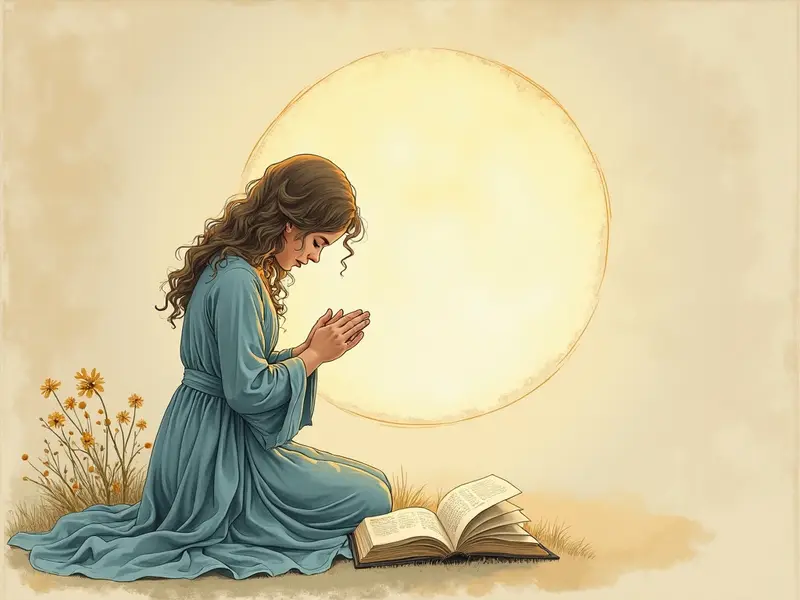
Prayer dream: what does it mean?
A prayer dream can feel deeply personal, even sacred, catching you off guard when you wake. It usually points to something your heart is working through, whether you consider yourself religious or not.
Dreaming of “prayer” with a detail
Praying in a dream often happens when you're carrying something heavy that feels bigger than you can manage alone. It can appear during a health scare, a hard decision, grief, or simply a season where you feel stretched thin. The mind sometimes reaches for the language of prayer because it's a familiar way of expressing hope, surrender, or a request for help.
The setting and words matter. Praying in a church or quiet room often points to a search for clarity or peace. Praying urgently, out loud, or in a crowd can reflect anxiety about something you can't control and wish someone or something bigger would step in and fix.
Sometimes this dream isn't about religion at all. It can be your mind's way of processing guilt, gratitude, or a wish to be forgiven or understood. Prayer, in dream language, often stands in for honesty with yourself, the parts of you that rarely get spoken out loud during the day.
If someone else is praying for you in the dream, it can suggest you feel supported, watched over, or cared for, even if you don't consciously realize it yet.
If the prayer feels calm, hopeful, or comforting, it often means you're finding your footing again after a hard stretch. It can suggest inner peace returning, a decision settling, or a sense that you're not carrying your worries entirely alone anymore.
If the prayer feels desperate, frantic, or unanswered, it may point to real anxiety about something you feel powerless over. This isn't a bad omen. It's more likely your mind processing stress and asking you to notice what feels too heavy to carry alone right now.
Spiritual, biblical & cultural meaning
In a spiritual sense, many people see prayer dreams as a sign of the soul reaching for connection, comfort, or guidance. Some take it as encouragement to slow down and listen inwardly. Others view it simply as the mind echoing a habit of faith that already brings them peace during the day.
More like this: all dreams about danger, emotions and events →


Frequently asked questions
›What does it mean to dream about praying?
It usually means part of you is asking for comfort, guidance, or relief from something stressful. The dream often shows up during hard decisions, worry, or grief, reflecting a genuine wish to feel supported or at peace.
›Is dreaming about prayer a good sign?
Most often, yes. It tends to reflect hope, reflection, or a search for calm rather than anything alarming. A peaceful prayer dream can mean you're processing stress in a healthy way and finding your center again.
›Why did I dream someone was praying for me?
This often points to a quiet feeling of being cared for or supported, even if you haven't consciously noticed it. It can also reflect a wish for reassurance from someone close to you, or from within yourself.
›Does dreaming about prayer mean something spiritual is happening?
It can feel that way, and many people see it as a meaningful, personal moment. It may also simply reflect your mind processing emotion using familiar, comforting language. Both readings are valid, and neither cancels out the other.
›Why do I dream about praying when I'm not religious?
Prayer is a universal symbol for hope and surrender, so the mind can use it even without religious belief. It often just means you're wishing for relief, guidance, or comfort during a stressful or uncertain time.