
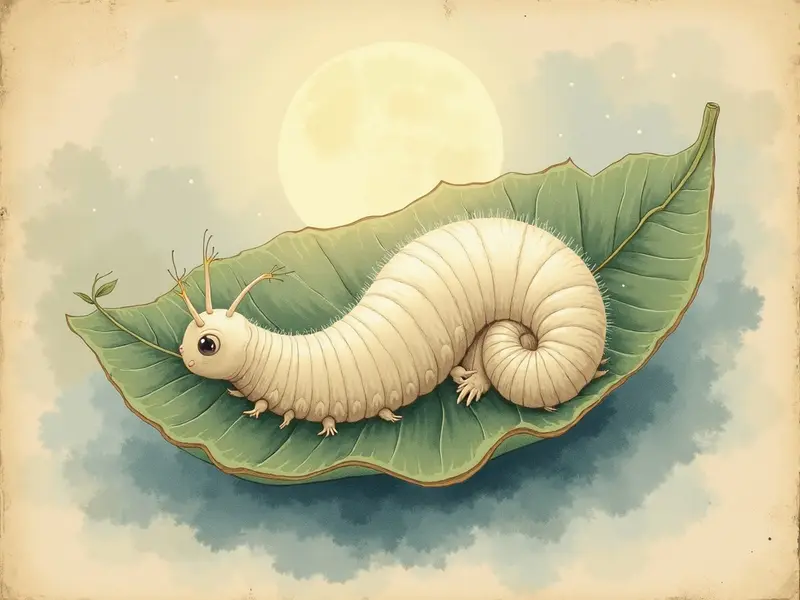
Old larva dream: what does it mean?
Old larva dreams add a specific twist to the ordinary larva image: this isn't a creature at the start of its journey, it's one that seems to have lingered far too long in an in-between stage.
Dreaming of “larva” with a detail
A plain larva usually speaks to potential, something new and forming, full of promise. An old larva shifts that meaning. It suggests a version of yourself, a project, or a relationship that hasn't finished becoming what it's meant to be. Time has passed, but the transformation stalled.
This can reflect a job you've outgrown but haven't left, a personal habit you meant to change months ago, or feelings you've kept unprocessed. The dream isn't scolding you. It's simply naming a delay, something your mind has noticed sitting there longer than it should.
If the old larva in your dream seemed calm or unbothered, it can mean you're finally aware of the delay, which is the first real step toward change. Awareness like this often arrives right before things start moving again in waking life.
If the larva looked sickly, stuck, or the dream felt heavy, it may reflect real frustration about something you've let sit too long. This isn't a warning of failure, just a nudge that avoidance has a cost, and you already sense it.
More like this: all dreams about animals →


Frequently asked questions
›What does it mean to dream about an old larva specifically?
It usually symbolizes stalled growth, something in your life that should have developed or changed by now but hasn't. It's less about the creature itself and more about a delayed transition you may be sensing on some level.
›Is dreaming of an old larva a bad sign?
No. It's not a warning, more like a gentle observation from your subconscious. It simply flags an area of life that feels overdue for movement, giving you a chance to notice it before frustration builds.
›Does an old larva dream mean I'm falling behind in life?
Not at all. It typically reflects one specific stalled situation, not your whole life. Most people have at least one area, a habit, decision, or relationship, that's taking longer to shift than they expected.