
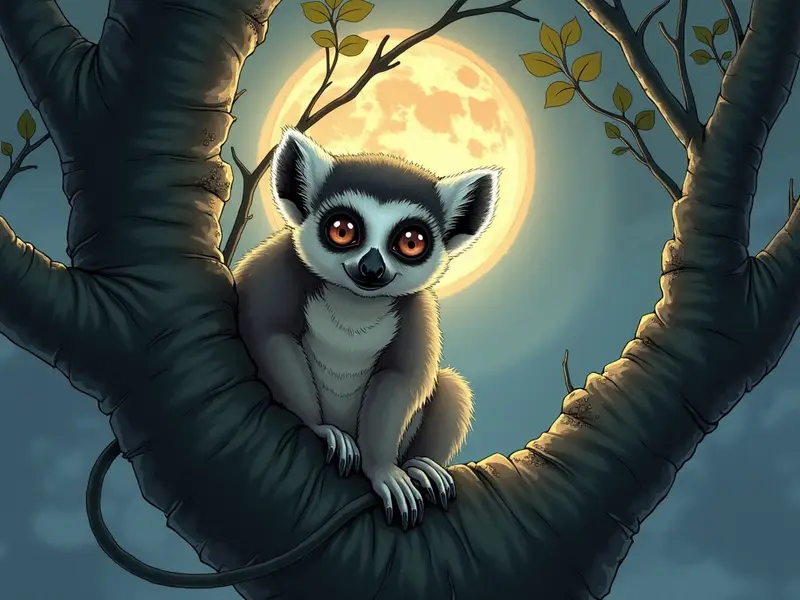
Lemur dream: what does it mean?
A lemur dream can feel oddly memorable, those wide eyes, the quick movements, the sense of something ancient and alert watching you back. It often reflects instincts you're just starting to notice.
Lemurs occupy an unusual place in the animal world, closer to the base of the primate family tree, and that ancient, unpolished quality often shows up in dream interpretation. Seeing one in a dream can suggest you're tapping into older, more instinctive parts of yourself, reactions or gut feelings you don't usually lead with.
Because lemurs are so alert and wide-eyed, this dream sometimes shows up when you're feeling watchful in waking life. You might be paying close attention to a person, situation, or decision, sensing you need to stay sharp even if nothing feels overtly wrong.
The playful, almost mischievous energy lemurs carry can also point to a need for more spontaneity. If your days have felt overly scheduled or serious, a lemur dream might be nudging you to loosen up and let your curious, quicker instincts guide you for a while.
Sometimes the dream simply reflects fascination with something unfamiliar, a new environment, a new person, or an unexplored part of your own personality that feels a bit exotic and hard to pin down.
A calm or friendly lemur suggests healthy curiosity and good instincts guiding you right now. It can mean you're tuned in to your surroundings, quick to notice small details, and open to a bit of playfulness. This dream often shows up when your intuition is sharp and working in your favor.
If the lemur felt frantic, cornered, or unsettling, it may reflect nervous energy or overstimulation in your waking life. You might be feeling watched, on edge, or unable to slow your racing thoughts. It can also point to instincts you've been ignoring that are asking for a little more attention.
Spiritual, biblical & cultural meaning
In a spiritual sense, some see lemurs as symbols of heightened awareness or a call to trust unseen guidance, since their wide eyes suggest seeing clearly in the dark. Others view unusual or exotic animals in dreams as gentle reminders to stay alert to intuition. There's no fixed biblical reference tied to lemurs specifically.
More like this: all dreams about animals →


Frequently asked questions
›What does it mean to dream about a lemur staring at you?
A staring lemur often reflects a feeling of being closely watched or evaluated in waking life. It can also mean part of you is paying very close attention to a situation, almost studying it, before deciding how to respond.
›Does dreaming of a lemur mean something bad?
No, lemur dreams aren't a warning sign. They usually point to curiosity, instinct, or alertness rather than anything negative. Even an unsettling lemur dream tends to reflect nervous energy rather than real danger ahead.
›Why do I keep dreaming about lemurs?
Recurring lemur dreams often show up when your curiosity or instincts feel especially active, maybe you're exploring something new or sensing you need to stay alert. It can also mean you're craving more spontaneity or lightness in your routine.
›What does a baby lemur in a dream mean?
A baby lemur often represents a new instinct, idea, or curiosity that's just beginning to develop. It can suggest you're in the early stages of trusting your intuition or exploring a fresh interest with a sense of wonder.
›Is a lemur dream connected to feeling anxious?
Sometimes. Because lemurs appear alert and quick-moving, a dream featuring one can mirror a mind that's been on high alert. If you've felt anxious lately, the dream may simply be echoing that watchful, keyed-up state.