
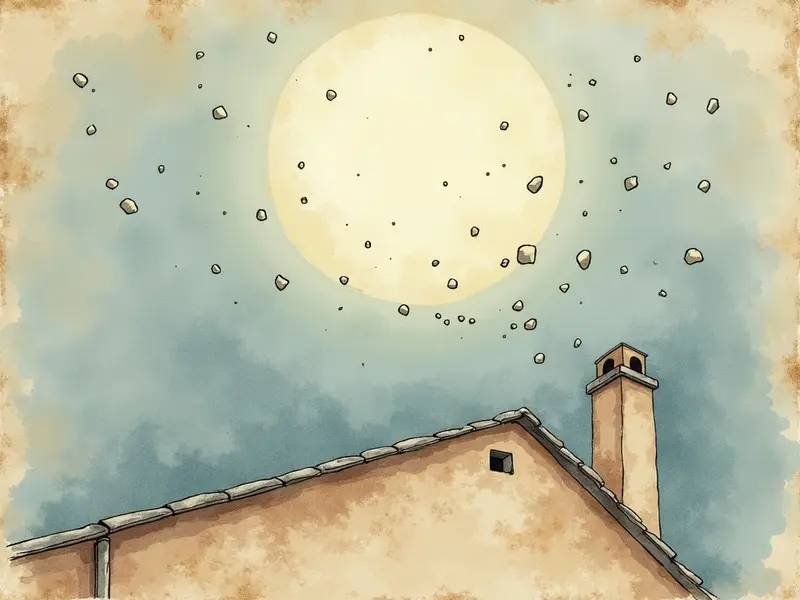
Hail after storm dream: what does it mean?
Hail after storm shifts the meaning from ordinary hail: it's not the main event but an aftershock, arriving once you'd already relaxed and thought the worst had passed.
Dreaming of “hail” with a detail
Plain hail dreams often point to sudden, sharp stress. But when hail comes after a storm, the order matters. Your mind isn't warning you about the storm itself; it's warning you that relief might be premature. Something you thought was resolved could have one more round left in it.
This can show up when real life has a similar shape: a hard conversation that seemed finished but isn't, a project that wrapped up except for one loose end, or an emotional situation where you exhaled too soon. The hail is small compared to the storm, but it still stings because you weren't braced for it.
If the hail felt brief or almost funny in the dream, it likely means you're more resilient than you realize. You've weathered the big thing already, and your mind is just double-checking that you can handle a small, final surprise without it knocking you over.
If the hail felt alarming or unfair, it may reflect frustration that peace keeps getting interrupted. Watch for a tendency to relax completely the moment things go quiet, only to feel blindsided later. A little extra patience before declaring 'all clear' can help.
More like this: all dreams about nature and weather →


Frequently asked questions
›What does it mean to dream of hail after a storm has already passed?
It usually means a resolved situation isn't quite finished. Your mind may be flagging a small loose end or a delayed reaction from something stressful that you thought was already behind you.
›Is hail after storm a bad omen in dreams?
Not necessarily. It's less about danger and more about timing. It gently suggests staying a little alert even after relief sets in, so a small surprise doesn't catch you off guard.
›Why does the order of storm then hail matter in dream interpretation?
Sequence shows the mind's storyline. Storm-then-hail suggests an aftershock or afterthought, while hail alone usually points to sudden shock. The order tells you whether the stress is arriving or trailing off.