
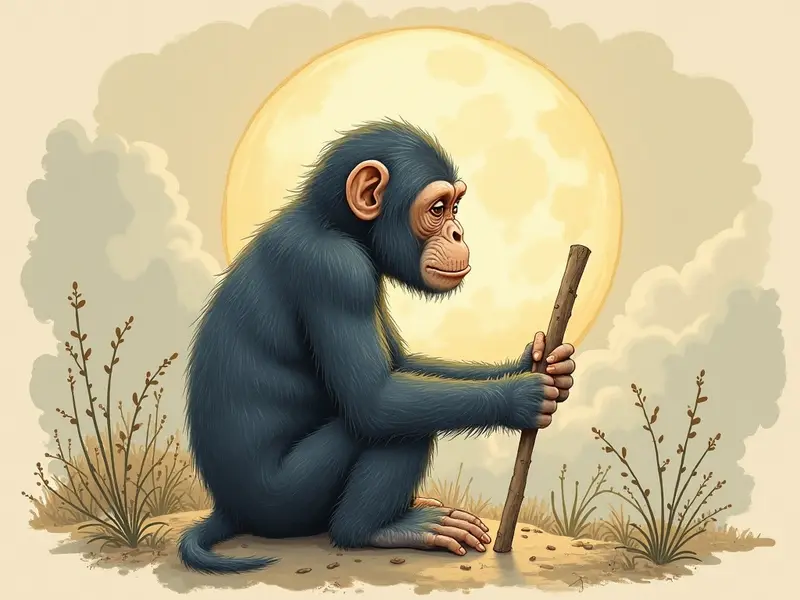
Chimpanzee dream: what does it mean?
A chimpanzee showing up in a dream tends to grab attention fast. Smart, expressive, and a little unpredictable, this animal often mirrors something familiar in ourselves that we haven't quite figured out how to handle yet.
Dreaming of “chimpanzee” with a detail
Chimpanzees are strikingly close to humans in behavior, which is exactly why they show up in dreams to represent parts of us that feel almost too familiar. A chimp in a dream can stand for instinct, mimicry, or the more impulsive, unfiltered side of your personality that doesn't always follow polite rules.
Because chimps live in complex social groups full of alliances, teasing, and power plays, this dream can also point to office politics, family dynamics, or friendships where things feel a little competitive or performative right now. You might be sensing hidden agendas or noticing your own urge to jockey for position.
A chimpanzee can also simply reflect playfulness and curiosity. If the dream felt lighthearted, it may be nudging you to loosen up, laugh more, or stop overthinking a situation that doesn't need to be so serious.
Sometimes this dream shows up when you're aware of a gap between how you act and how you'd like to act, since chimps can feel like a funhouse mirror version of human behavior, familiar but a bit exaggerated.
If the chimpanzee felt friendly, funny, or curious, it can suggest good instincts, quick thinking, or a healthy sense of humor about a tricky situation. It may also reflect strong social awareness, meaning you're reading group dynamics accurately and adapting well to the people around you.
If the chimp felt aggressive, chaotic, or mocking, it may reflect frustration with impulsive behavior, either yours or someone else's. It can also point to feeling manipulated or outmaneuvered in a social or work situation, or sensing that emotions are running a little wild and need more grounding.
Spiritual, biblical & cultural meaning
In a spiritual sense, some see the chimpanzee as a reminder of our animal nature waiting to be balanced with wisdom and self-control. Because it isn't a common biblical symbol, many interpret it more loosely, as a nudge to notice instinct versus intention, and to lead with patience rather than impulse.
More like this: all dreams about animals →


Frequently asked questions
›What does it mean to dream about a chimpanzee attacking you?
This usually reflects stress from a situation that feels unpredictable or out of your control, like a tense relationship or a chaotic work environment. It's rarely about actual danger. Instead, it points to feeling emotionally cornered or reacting defensively to pressure you haven't fully named yet.
›Does dreaming about a chimpanzee mean something about my personality?
It can, especially if the chimp's behavior stood out. Playful chimps often reflect your curious or lighthearted side, while aggressive or sneaky ones may highlight impulsiveness or manipulation you're noticing in yourself or others around you.
›What does it mean if the chimpanzee in my dream was friendly?
A friendly chimp often signals comfort with your instincts and social ease. It can suggest you're navigating relationships smoothly, trusting your gut, or feeling more relaxed about showing your playful, unpolished side to people you trust.
›Why did I dream about a chimpanzee escaping or being caged?
This often relates to feeling restricted somewhere in life, like a rule-heavy job or a relationship where you're holding back your true self. An escaping chimp can reflect a desire for more freedom, while a caged one may mirror feelings of restraint.