
Dreaming of Storms, Flash Floods, or Losing Power? What It Means as Wild Summer Weather Batters the US
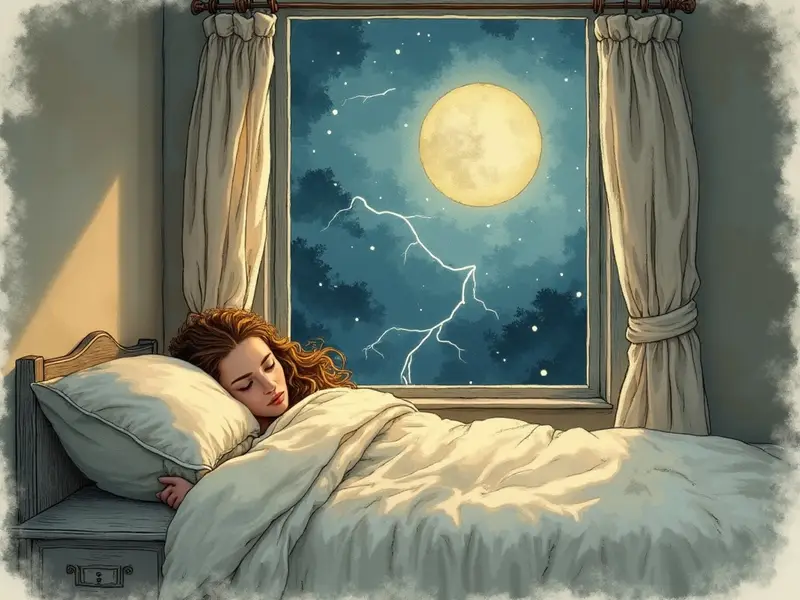
If you've jolted awake this week convinced your bedroom was filling with water, or dreamed the lights went out and you couldn't find the door, you're not imagining things. Real storms have been rattling real windows across the country, and the brain doesn't always wait for morning to process that.
This Week's Wild Weather: What's Actually Happening
The storms battering the Northeast, Mid-Atlantic and Midwest this month have been unusually relentless. More than 500,000 customers were without power on July 6, after a holiday weekend marked by severe thunderstorms, damaging winds and heavy rain across parts of the Northeast, Mid-Atlantic and Midwest. Pennsylvania and Michigan reported the highest number of outages, with New Jersey, New York, Maryland and Connecticut also among the hardest-hit states, and Pennsylvania alone topped 107,000 customers without power.
The flooding risk has been just as serious as the outages. The intense heat and humidity blanketing the Northeast and Mid-Atlantic have been setting the stage for a dangerous flash flooding threat, with storms tapping into an extraordinarily deep pool of tropical moisture and behaving like atmospheric sponges capable of dumping torrential rain in a short time. Forecasters have repeatedly warned residents from Virginia to New England to watch for sudden, fast-moving water on roads and near small creeks.
It hasn't just been rain and wind causing trouble, either. Earlier in the month, three children died after a recreational boat capsized on Geneva Lake during severe storms, with six other occupants including another child rescued, while heavy rainfall also caused localized flooding and closures on major roadways. Combine that kind of real danger with the heat and the darkness of a blackout, and it's no surprise the mind carries some of that tension straight into sleep.
Why Storms Get Into Your Dreams
There's a physical reason hot, stormy nights produce stranger dreams. Heat itself puts the body on edge before a single dream image appears. Quality of sleep is affected when temperatures are high because heat puts the body in a naturally anxious state, and dreams can become more vivid and more uneasy simply because the body is overheated. Add a power outage that kills the fan or the air conditioner, and the body is primed for a restless night before the mind even starts building a story.
Layered on top of that is the ordinary way stress shows up during sleep. Sleep psychologists describe dreaming as a kind of overnight filing system for the day's worries. Scientists still don't fully understand why we dream, but one theory is that dreaming helps the brain process emotions, store memories and solve problems, working through what we've experienced during the day, especially anything emotionally charged, so anxiety dreams are usually a reflection of stress and emotional overload. A week of flood watches, downed trees and flickering lights is exactly the kind of emotionally charged material the brain likes to sort through at night.
At a biological level, this happens because the threat-detection part of the brain doesn't fully power down in sleep. Stress and anxiety can lead to vivid dreams and nightmares because the brain continues processing emotions, memories, and stress responses during REM sleep, and when the amygdala becomes hyper-responsive while a less active prefrontal cortex can't fully regulate those signals, it ends up replaying or exaggerating daily worries at night. That's often why a dream about a storm doesn't look like a calm weather report. It looks like a wall of water, a house going dark, or a ceiling giving way.
Common Storm Dream Symbols and What They Might Mean
Rising water is probably the most frequent image people report after a stressful storm season, and dream writers across psychological and folkloric traditions tend to agree on its emotional weight. Flood dreams often reflect deep emotional turmoil or overwhelming feelings, and may indicate that the dreamer is facing intense emotional challenges or situations that feel beyond their control. Where the water shows up matters too. A flooded house often points to your inner world, home life, personal security, or family-related emotional pressure. If your dream flood was murky rather than clear, that detail may carry its own note, since muddy floodwater often suggests confusion, unresolved emotion, or stress that is making it harder to think clearly.
Darkness and blackouts tend to show up alongside a different, more specific kind of unease: the fear of losing your bearings. A dream where the power cuts out and you're groping through a familiar room that suddenly feels strange fits neatly into a well-known dream pattern. Anxiety doesn't sleep quietly; it often manifests in dreams as scenarios where control is lost or escape seems impossible, with running through endless corridors or being trapped in strange spaces as common motifs. A blackout dream is really a trapped dream wearing different clothes, asking what happens when the systems you count on suddenly stop working.
Collapsing roofs and structures often trace back to a very literal source: the actual sound and sight of storm damage on the news or outside your window this week. Downed trees, damaged power lines and closed roads have been part of the daily backdrop across several states, and dreaming brains are notorious for recycling waking images almost unchanged. A roof caving in in a dream doesn't have to mean anything is wrong with your actual house. It can simply be the mind's shorthand for feeling like something solid in your life is under more pressure than usual.
Being trapped, whether in a car, a stairwell, or a flooding basement, tends to point back to the same emotional territory as the darkness dreams: a sense that you can't act fast enough or that circumstances have outpaced your ability to respond. These dreams often involve scenarios such as running late, being chased, or losing control, all symbolic of stress and overactivation in the nervous system. A flash flood warning that arrives at 2 a.m. is a fairly direct real-world echo of exactly that feeling.

The Thunder Moon: July's Stormy Folklore
July's full moon carries a name that fits this season almost too well. Thunder Moon, a name used by the Western Abenaki, along with Halfway Summer Moon among the Anishinaabe, refers to the stormy weather and summer season. The naming isn't mystical weather control, just old, careful observation, since the name comes from the fact that July has historically been one of the stormiest months of the year across much of North America, with spectacular thunder and lightning displays often accompanying the height of summer.
There's a gentle emotional layer to the folklore too, one that many readers find comforting rather than ominous. The heat energy of this time of year can get to be a little too much, and people can get overwhelmed with the energy of the season, since sleep tends to be lighter and shorter in summer, which can lead to overtiredness, and July can also be a month of intense, stormy emotions.
Old almanac tradition treats the season's storms less as a bad omen and more as a cue to get ready. Old almanac weather lore for July leans on two ideas: the Buck Moon is a turning point for the second half of summer, and the storms of the Thunder Moon are a planning signal, not a punishment. This year's Buck or Thunder Moon rises July 29, right in the thick of the season's most active stretch, which makes it a fitting backdrop for a run of storm-heavy nights and storm-heavy dreams.
Calming Storm-Related Nightmares
The good news is that storm dreams, however vivid, respond well to some fairly ordinary bedtime habits. Giving the brain a chance to unload its worries before you even close your eyes seems to make a real difference. Writing down worries or reflecting on emotions before sleep can help offload anxious thoughts, reducing their intrusion into dreams, while breathing exercises, meditation, or gentle stretching before bed help regulate stress and can reduce vivid, anxiety-driven dreams.
If a storm dream does wake you up, treat the racing heart the way you would any moment of nighttime alarm: slowly. Sit up, take a few slow breaths, and remind yourself where you actually are before trying to fall back asleep. Behavioral sleep specialists often point out that anxiety dreams and nightmares are distinct experiences with somewhat different feels. Nightmares are usually more intense, with strong feelings of fear, terror or helplessness that often wake you up, while anxiety dreams tend to focus more on stress or worry, like being unprepared or overwhelmed. Knowing which one you just had can help you decide how much attention it deserves come morning.
Keeping the physical environment cooler and calmer also matters more than people expect during a stretch of hot, stormy nights. Since the body enters a state of hyperthermia in extremely hot temperatures, and if body temperature rises for even half an hour it can activate the stress response system, a fan, a cool washcloth, or simply cracking a window before a possible outage can genuinely change how restless your dreams turn out to be.
Finally, if the dreams keep returning long after the actual storms pass, it may be worth naming what's underneath them rather than only trying to smooth over the surface. Keeping a dream journal can help identify recurring themes, offering insight into emotional patterns and unresolved stress.
What Recurring Flood or Power-Outage Dreams Reveal
A single storm dream during an actual flood watch is easy to explain: your brain is simply doing its nightly job of sorting through a loud, uncertain week. Recurring versions of the same dream, though, especially after the storms themselves have passed, tend to point toward something a little more personal. They often surface during stretches when daily life feels genuinely unpredictable, whether that's a shaky work situation, a health worry, or simply the accumulated fatigue of a long, hot summer.
The throughline across water dreams, blackout dreams, and trapped dreams is remarkably consistent. Flood dreams often reflect deep emotional turmoil or overwhelming feelings, with the floodwaters representing a flood of emotions, such as sadness, anger, or anxiety, that need to be acknowledged and addressed. A recurring blackout dream can be read the same way, not as a warning about your actual electricity, but as a nudge that some part of your life currently feels like it's running without backup power.
None of this means the dream is predicting anything bad. Many people find real comfort in the idea that these dreams are simply doing quiet, useful work. Dreams are seen as a way for the mind to process and make sense of daily experiences and emotions, serving as a release valve for pent-up feelings or a space for problem-solving. A summer full of real storms outside your window is, understandably, a summer that shows up in your sleep. Treating those dreams gently, as information rather than alarm, tends to be the calmest way through them.
See also in the dictionary
Frequently asked questions
›Does dreaming about a flood mean something bad will happen?
Not in a literal sense. Flood dreams are generally understood as reflections of overwhelming emotion or stress rather than predictions, often tied to feeling like something in daily life is moving faster than you can manage.
›Why do I have more nightmares during hot, stormy weather?
Heat itself raises body temperature and stress hormones, which can make sleep lighter and dreams more vivid and unsettling, even before factoring in the added stress of storm warnings or power outages.
›What does it mean if I keep dreaming about the power going out?
Recurring blackout dreams often echo real anxiety about losing control or feeling unprepared, similar to dreams about being trapped. They tend to reflect ongoing stress rather than any specific outcome.
›What is the Thunder Moon?
Thunder Moon is a traditional name for July's full moon, used by groups including the Western Abenaki, referring to the season's frequent summer thunderstorms rather than any supernatural cause of the weather.
›How can I stop having storm-related nightmares?
Journaling worries before bed, practicing slow breathing, keeping your bedroom cool, and tracking recurring dream themes can all help. If nightmares persist and affect daily life, talking with a sleep or mental health professional is a reasonable next step.
- Map Shows States Still Struggling With Power Outages After Weekend Storms - Newsweek
- Another round of severe storms, flood threats target Northeast, Mid-Atlantic after widespread power outages - FOX Weather
- Why Your Dreams Are Full of Anxiety - Cleveland Clinic
- Does Hot Weather Give You Anxiety Dreams? 7 Ways to Cool Down - Healthline
- July 2026 Full Buck Moon: Meaning, Peak Time, and July Moon Traditions - Almanac.com