
New Moon on July 14: What It Means When You Dream Under the Darkest Sky of the Month
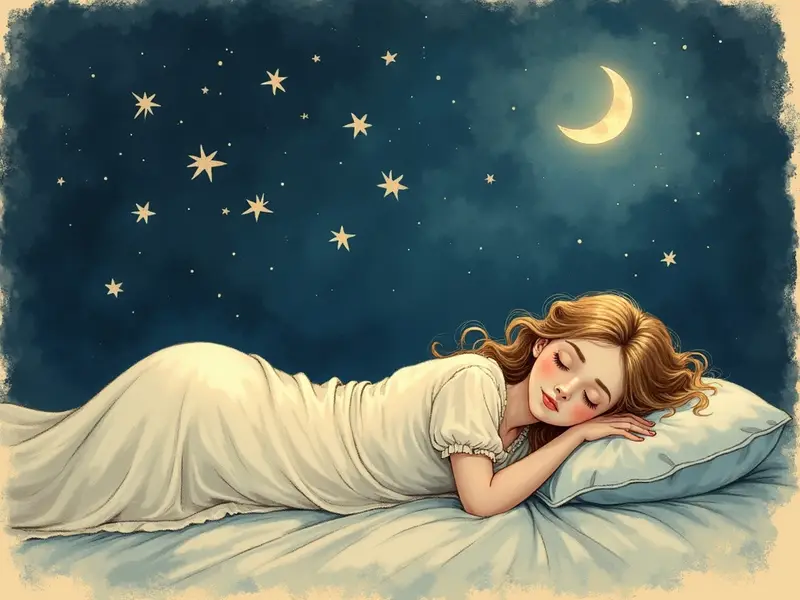
The moon disappears completely on July 14, and if you happen to wake at 3 a.m. that night, the window may look almost like a black square. That kind of dark, moonless night has always made people wonder whether their sleep, and their dreams, shift when the sky goes quiet.
The Night the Sky Goes Quiet
Every month the moon completes a lap around Earth, and at one exact point in that lap it sits directly between us and the sun, showing us its shadowed side. Astronomers call this the new moon, and this time it happens in the sign of Cancer. The New Moon in Cancer 2026 takes place on July 14th, 2026 and it brings a reset around topics tied to emotional safety, memory and care. The exact conjunction lands in the early morning hours on the East Coast, which means most Americans will actually be asleep, under a genuinely dark sky, right as the lunar cycle turns over.
A New Moon is essentially the opposite of a full Moon; during a New Moon we see the side of the Moon that is not being illuminated by the Sun, which makes the Moon blend in with the night sky. There is no glowing disk to blot out stars, no silvery light pooling on the floor. The New Moon marks the beginning of a lunar cycle, which is part of why so many cultures treat this particular night as a kind of doorway rather than an ordinary Tuesday.
This year the timing carries a little extra weight because of where the moon sits. Moon in Cancer relates your feeling of safety to home, family and related activities such as cooking and gardening, and you may be prone to emotional fluctuations, so it helps to forgive and let things go rather than dwelling on them. If your dreams that night lean domestic, tender, or a little weepy, this is likely part of the reason.
Why Real Darkness Might Change Your Sleep
There is decent science behind the idea that moonlight itself nudges our sleep around, even if a new moon's darkness hasn't been studied quite as directly as a full moon's glow. A study co-authored by Yale anthropologists found that lunar phases affect people's sleep schedules, with humans tending to stay up later and sleep less on evenings preceding a full moon, when moonlight is brightest in the early night. The same research, published in Science Advances, found that sleep starts later and is shorter on the nights before the full moon when moonlight is available during the hours following dusk.
Harvard Health summarized similar findings this way: individuals took anywhere from 30 to 80 minutes longer to fall asleep during the lead-up to the full moon, and lost anywhere from 20 minutes to 90 minutes of total sleep on those nights. Follow that logic in reverse, toward the new moon, and the absence of that early-evening glow may simply remove one small source of light-driven sleep disruption, leaving more room for an easier drift into deep sleep and, eventually, REM.
That said, sleep scientists are careful about overstating the moon's power. Moonlight brightness is only 7% the strength of direct sunlight, which is a relatively low intensity, and most of us are exposed to far more artificial light at night than anything the moon could produce anyway. Still, in a bedroom with real blackout curtains and no phone screen, a moonless night is about as dark as a room gets, and light exposure at night can hinder transitions between sleep cycles, reducing quality of sleep, while too much light can cause repeated awakenings that interrupt deeper, more restorative stages. Less light in the room, in theory, means fewer of those interruptions.
A Blank Page: New Moon Rituals and Intention-Setting
Long before anyone measured melatonin, people treated the new moon as a kind of clean start, and that instinct has held up well. The New Moon is considered a time of possibility, and with the sky dark and the Moon hidden from view, it offers a clean slate. Astrologers describe it in almost the same language sleep researchers use for a blank sheet of paper: it signifies a blank slate, providing an ideal opportunity to set intentions and manifest goals, and because the moon is not visible during this phase, it symbolizes the hidden potential within us waiting to be awakened.
This is why so many people use the night of a new moon to write down what they want for the weeks ahead. New moons are considered an excellent time to set intentions and plant seeds for what's to come, and the practice tends to be simple. The New Moon is treated as a time to start something new, to plant a new idea, the start of the lunar cycle and a great time for intention setting, reaching out, initiating a project, or dreaming big.
Because this July's new moon falls in Cancer, a water sign, many moon-watchers pair the ritual with something soothing rather than showy. Any new moon can be a good time for a ritual bath, though moons that fall under water signs like Cancer really lend themselves to a good soak. None of this requires elaborate ceremony; even jotting a short, honest sentence about what you'd like more of, then tucking the paper away until the next full moon, is enough to mark the night as different from any other.
Cancer Waters: Why This New Moon Feels Extra Emotional
Every new moon carries the flavor of whatever zodiac sign it lands in, and Cancer is famously the most emotionally porous sign of the twelve. Ruled by the emotional Moon, Cancers wear their hearts on their sleeves and possess a deep well of intuition, allowing them to understand others' feelings as well as their own. When the new moon itself sits in this sign, that sensitivity gets amplified for everyone, not just people born under Cancer.
Astrologers tracking this year's chart describe it as an unusually tender lunation. The rawness and hypersensitivity accumulated over the month can fade under this new moon, offering an inflection point, with Cancer's influence adding an extra layer of healing since Cancer is a sign of consciousness, compassion and intuition. That framing shows up across several independent sources describing this same date, which suggests it isn't just one writer's flourish.
For dreaming specifically, this matters because Cancer is tied so tightly to home, memory, and the people we love. Once a year, during Cancer season, the new moon invites a quiet emotional and psychological return home, not only to a physical place but to an inner one made of memory, belonging, and emotional truth. If your dreams on this night wander back to a childhood house, an old friendship, or a parent, that thread fits neatly with what this new moon tends to stir up.
What New Moon Dreams Tend to Whisper
Dream folklore has long treated the new moon differently from its brighter cousin. Where a full moon dream is often read as a moment of climax or clarity, a new moon dream leans toward beginnings still forming in the dark. A full moon signifies completion and wholeness, while a new moon symbolizes new beginnings. Older dream dictionaries even map the whole lunar cycle onto stages of life: the new moon can be interpreted as infancy, the crescent as symbolic of youth and adolescence, and the full moon as reflecting maturity, completion, or pregnancy.
Certain images seem to recur specifically around this phase. Common dream symbols associated with new moons include keys or doors that suggest unlocking opportunities, water that suggests renewal, stars or planets that suggest guidance from beyond, and snakes that suggest rebirth. A dream interpreter quoted on the topic put it simply, noting that whatever dream appears during this phase directly relates back to a new beginning.
There is also a long thread of folklore treating the new moon as a hopeful omen rather than something to fear. A New Moon appearing in dreams has traditionally been said to promise increased wealth or a happy marriage. Even a completely dark or invisible moon leans toward possibility in this tradition. A black moon can represent a phase of transformation and new beginnings, since just as the moon goes through phases including periods of darkness, dreaming of one may suggest entering a period of profound change and personal growth.
New Moon Dreams vs. Full Moon Dreams: Two Different Kinds of Nights
If you keep a dream journal for even a couple of months, you may notice that new moon nights and full moon nights simply feel different on paper. On a full moon, dreams often feel wilder, while on a new moon, dreams tend to carry deeper, quieter meaning. One dream expert interviewed on the subject frames the new moon as a particularly good time to actually understand what a dream is telling you, noting that during this time, the moon's energy is most conducive to understanding our dreams.
The full moon's dream folklore tends to run louder and busier, matching the brighter, more restless sky that produces it, while the new moon's dream tone stays quieter and more inward. Some researchers have measured a version of this pattern directly rather than just describing it anecdotally. Research has shown people are more likely to have bizarre dreams around a full moon, with a further increase noted around the waxing crescent phase.
None of this means a new moon guarantees a quiet, meaningful dream and a full moon guarantees chaos. But the pattern is consistent enough, across both folk tradition and casual sleep observation, that it's worth noticing which phase the sky is in the next time a dream feels unusually vivid, or unusually still.
See also in the dictionary
Frequently asked questions
›What does it mean when the new moon is in Cancer?
A new moon in Cancer tends to highlight home, family, and emotional security. Since Cancer is ruled by the Moon itself, this placement often brings a deeper wave of intuition and sensitivity, which can carry over into softer, more nostalgic or feeling-driven dreams.
›Does a new moon actually make you sleep better?
There's no dedicated study on new moon sleep, but research shows moonlight delays sleep and shortens it before a full moon. A moonless sky removes that extra light, which combined with a dark bedroom may support smoother, less interrupted sleep cycles.
›Why do people set intentions on the new moon instead of the full moon?
The new moon is treated as a blank slate, a fresh starting point in the lunar cycle, which makes it a natural time to plant an idea. The full moon, by contrast, is more associated with completion, release, and seeing things through to fruition.
›What's the difference between full moon dreams and new moon dreams in folklore?
Full moon dreams are traditionally described as wilder, more vivid, and tied to emotional peaks or endings. New moon dreams are described as quieter and more symbolic of beginnings, often featuring images like doors, water, or stars.
›Is it bad to dream of a dark or black moon?
Not in most dream traditions. A dark or black moon is generally read as a sign of transformation and new beginnings rather than something ominous, often pointing to hidden potential or a period of personal growth just starting to take shape.
- New Moon in Cancer 2026: Meaning + Rising Signs — My Astro Diaries
- New Moon in July 2026, New Moon in Cancer - Astro-Seek
- Ancient echoes: Moonlight affects human sleep patterns | Yale News
- Moonstruck sleep: Synchronization of human sleep with the moon cycle | Science Advances
- Moonlight may affect sleep cycles - Harvard Health
- Do Moon Phases Affect Your Sleep? - Sleep Foundation
- New Moon Rituals: How to Set Intentions That Manifest | The Pagan Grimoire
- 9 New Moon Rituals For Intention Setting, Manifestation & More - mindbodygreen
- Does the Moon Affect Dreams? Meaning of Lunar Phases and Sleep - Wylde Moon
- Moon Dreams and Superstitions - The Old Farmer's Almanac
- What Is a New Moon? Meaning, Phases, Folklore - The Old Farmer's Almanac