
Why Do We Dream About Loved Ones Who Have Passed?
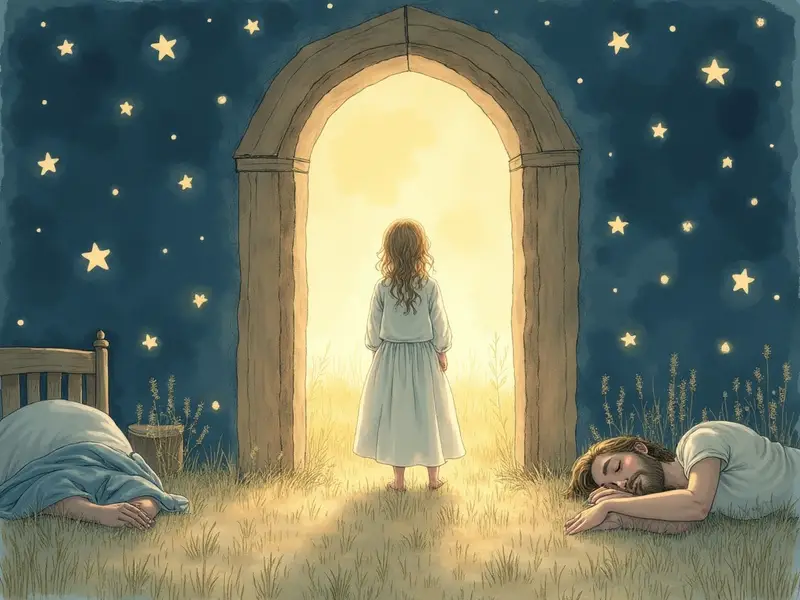
Somewhere between two and five in the morning, a mother speaks in the voice you'd almost forgotten. A grandfather laughs at his own joke one more time. Then you wake, chest tight, wondering if it was just a dream or something more.
A Dream That Feels Different From All the Others
People who have these dreams almost always describe the same strange quality: they don't feel like ordinary dreams. Where a typical dream might dissolve into fog and nonsense by breakfast, a dream about someone who died tends to stay sharp for years. Historical and cross-cultural studies are full of examples of visitation dreams with recurrent features including hyper-realism, emotional intensity, and strange variations in the appearance and behavior of the dead person, and people often awaken with a vivid sense that they really saw their deceased loved ones, as real an encounter as anything in waking life.
Some researchers who study after death communication even suggest a different label is needed for these experiences. It has been proposed that these 'dream ADCs' might more appropriately be called 'sleep ADCs' because, unlike REM dreams, they typically feel subjectively real and persist vividly in memory for years. That staying power is part of what sets these dreams apart from the forgettable ones about missing a flight or losing your teeth.
The scale of the experience surprises many people once they realize how common it actually is. A Pew Research Center survey of Americans revealed the high proportion of adults who have dreamed of deceased relatives, matching other findings that show visitation dreams are a broadly historical, cross-cultural phenomenon with surprisingly powerful effects on the dreamers. If you've had one of these dreams, you are in very good company, whether or not you'd ever mentioned it out loud before.
That sense of 'this was different' is also something grief specialists hear often in their offices. Visitation dreams are experiences in which a person perceives a deceased loved one during sleep in a way that feels distinctly different from an ordinary dream, often described as vivid, emotionally clear, and purposeful, with the loved one appearing healthy, peaceful, and able to communicate reassurance or presence.
What the Grieving Brain Might Be Doing
From a purely psychological angle, many clinicians see these dreams as part of the mind's ordinary housekeeping after a loss. A grief therapist has noted that these dreams are the brain's way of making sense of the 'senseless' experience of losing a loved one, explaining that having a grief dream simply means the brain is still trying to process what happened. Sleep and memory researchers have long known that the sleeping brain works through emotionally loaded material, sorting and re-sorting it in ways that waking logic doesn't always follow.
Formal studies back up the idea that these dreams carry real emotional weight rather than random noise. Research on people who have these dreams has found that specific effects on the bereavement process included increased acceptance of the loved one's death, comfort, spirituality, sadness, and quality of life, supporting the theory that dreams of the deceased are highly prevalent and often deeply meaningful for the bereaved. That combination of comfort and sadness in the same dream is common, since grief rarely arrives as one clean emotion.
One useful idea from dream research is called the continuity hypothesis. This theory suggests that our dreams reflect our waking life thoughts and concerns, including our grief. Under this view, if someone's death is occupying your thoughts, worries, or unfinished conversations during the day, it makes sense that person would resurface at night, working things out in a different key than waking logic allows.
Academic dream researchers have also tracked how these dreams behave over time rather than treating them as a single, uniform event. Dreams of deceased loved ones show that many different individuals 'repeat' the same type of dream in reaction to a loss, and changes in the content of these dreams seem to reveal the underlying psychological processes following from the loss. The dream you have one month after a death may look quite different from the one you have three years later, and that shift itself can be a quiet marker of how grief is moving through you.
The 'Continuing Bonds' Idea
For decades, some grief theories suggested that healthy mourning meant letting go of the person entirely. More recent psychology has moved away from that model. Following bereavement, continuing bonds include engaging with memories, illusions, sensory and quasi-sensory perceptions, hallucinations, communication, actions, and belief that evoke an inner relationship with the deceased. A systematic review of this research found that three themes emerged from the literature: comfort and distress, ongoing bonds and relational identity, and uncertainty, conceptualizing, and spirituality, describing how continuing bonds support the accommodation of the death story and meaning reconstruction.
Dream researchers who study after-death communication frame it similarly, contrasting older and newer models of grief. While a traditional psychoanalytic model of grief views contact with the departed as problematic, the modern continuing bonds model sees maintaining a relationship differently, as part of healthy adjustment rather than a failure to move on. Dreaming of someone, then, isn't necessarily a sign you're stuck. It may simply be evidence that love doesn't switch off the day someone dies.
This reframing matters emotionally too. For many people, these dreams become part of a continuing bond rather than a final goodbye, marking turning points in the grieving process and offering a sense of connection that supports emotional transformation. Instead of asking why you can't let this person go, it may be more useful to ask what the ongoing bond is offering you right now.

Common Patterns Researchers Have Found
Dream researcher Deirdre Barrett conducted one of the most detailed studies of this specific dream type, working through hundreds of dream diary entries and survey responses. Her most systematic work found that although her general focus was on how any deceased person is depicted in dream reports, most such dreams concerned deceased people who could be described as loved ones. She discovered these dreams weren't just one-time events.
They often occur in the months or years after a loved one dies and have similar enough content to be considered 'typical' dreams, with some subjects reporting these dreams occurring more than once, making them recurrent as well as typical. This recurrence is part of why researchers treat them as a distinct category worth studying on their own terms.
Other research has zeroed in on the actual content of these dreams, and a few themes keep showing up across different studies and cultures. A 2013 study noted that common themes include pleasant memories or experiences, the deceased free of illness, memories of the deceased's illness or time of death, the deceased appearing comfortable and at peace in the afterlife, and the deceased communicating a message.
If your loved one showed up looking younger, healthier, or unusually calm, that pattern is something many other dreamers have reported too, across very different backgrounds and relationships to the person who died.
Comfort, Guilt, and the Feelings Left Unsaid
Not every dream about someone who has died feels peaceful. Some carry tension, unfinished arguments, or a lingering sense of guilt, and grief specialists see that as meaningful too. In some cases, these dreams may reflect unfinished business or unresolved conflicts with the deceased, and if the person seems upset in the dream, one psychologist explains that it's you being mad at yourself for some reason, not the spirit of the person coming through.
Seen this way, an uncomfortable dream isn't a bad omen. It may be pointing toward something in your own heart that still wants attention, a conversation left unfinished or a regret that hasn't fully settled.
On the gentler end, these dreams can also simply fill a gap that daily life has left open. Dreaming about a deceased relative can often reflect a deep-seated desire for connection, especially for someone struggling with loneliness, and if the dreamer was close to this relative, the dream might provide temporary companionship and comfort.
That combination of missing someone and briefly having them back, even in sleep, is part of why these dreams can feel so bittersweet the next morning, carrying both warmth and a fresh wave of loss at once.
When These Dreams Arrive, and What to Make of Them
Not everyone dreams of their deceased loved ones at the same rate, and researchers have noticed some patterns around who tends to have more of these experiences. People with fixed ideas about religion, either for or against, tend to have fewer visitation dreams, which suggests these dreams may flourish especially in the space of open questions about death rather than settled belief.
If it's been a while since a loved one has appeared in your dreams, that absence likely says less than you might fear. Dream recall itself is famously unreliable. On average, people tend to forget 95 to 99 percent of everything they dream, so a missing visit may simply be a missing memory rather than a missing visit.
Grief also doesn't move in a straight line, and dreams seem to follow that same winding shape rather than a tidy schedule. Dreams can be seen as a nonlinear map that reflects the way grief itself unfolds, since grief does not move in stages or timelines but reshapes identity instead.
Whatever your dreams have or haven't shown you, that unevenness is part of the ordinary texture of mourning, not a sign that something has gone wrong. However these dreams come, or don't come, they seem to be one more quiet way that love keeps finding its footing after loss.
See also in the dictionary
Frequently asked questions
›Is it normal to dream about someone who has died?
Yes. Dreaming of deceased loved ones is considered a natural and healthy part of the mourning process by many grief researchers, and surveys suggest a large share of American adults have had this experience at some point.
›Why do dead loved ones often appear healthy or younger in dreams?
This is one of the most reported patterns in dream research. Common themes include the deceased appearing free of illness and comfortable and at peace, often in scenes drawn from pleasant memories.
›Does an upsetting dream about a deceased loved one mean something is wrong?
Not necessarily. Some specialists suggest tense dreams may reflect your own unresolved feelings rather than anything from the person who died, offering a chance to work through lingering guilt or unspoken words.
›Why haven't I dreamed about someone I lost, even though others in my family have?
Dream recall is naturally spotty, and people tend to forget 95 to 99 percent of everything they dream, so the dream may simply not be remembered rather than never having happened. Timing also varies widely from person to person.
›Can these dreams help with grieving?
Research suggests they often do. Studies have linked them to increased acceptance of the loved one's death, comfort, spirituality, and quality of life among people who have them.
- Who Is Most Likely to Dream of the Dead? | Psychology Today
- Dreaming of the Dead: Why It Happens and What It Means | Psychology Today
- Dreams of Deceased Loved Ones | UCSC DreamBank
- The impact of continuing bonds following bereavement: A systematic review
- Unlocking the Mysteries of Seeing Dead Loved Ones in Dreams | HowStuffWorks