
Dreaming About Dogs Right Now? What It Means During the 'Dog Days of Summer'
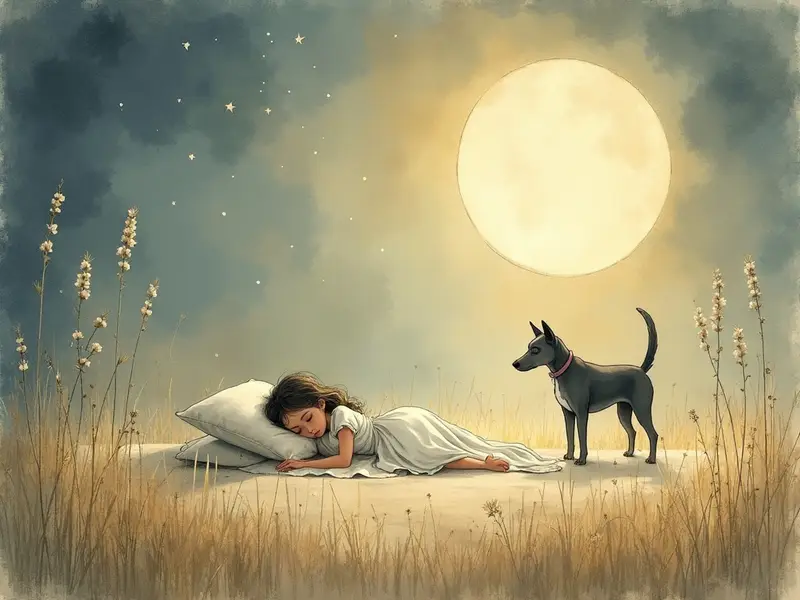
You wake up at 3 a.m., sheets damp, heart still racing from a dog that was either guarding you fiercely or chasing you down a hallway that doesn't exist. It's July. The dog days of summer are here, and so, it seems, are the dogs in your sleep.
Why Dogs Keep Showing Up in Your Dreams This Summer
There's a wonderfully strange coincidence at play right now. The calendar phrase "dog days of summer" has nothing to do with actual dogs napping on porches. The Old Farmer's Almanac traces the dog days to July 3 through August 11 each year, a period tied to the ancient observation that Sirius, the brightest star in the night sky, rose alongside the sun during this stretch. Ancient skywatchers in Greece, Rome, and Egypt believed the star's brightness added extra heat to the summer sun, even though we now know Sirius has no actual effect on Earth's temperature.
That old folklore stuck around because the name was catchy and the timing lined up so well with the year's most brutal heat. The real reason late July and August feel so relentless has to do with something called thermal lag, where oceans and land take weeks to absorb the sun's energy, so peak heat arrives well after the solstice rather than on it. None of that has anything to do with actual canines, and yet here we are, associating this scorching season with dogs anyway thanks to a constellation the Greeks called the Greater Dog.
So if you've noticed more dogs wandering into your dreams lately, it's fair to wonder whether the season itself is nudging your subconscious. The connection isn't mystical astrology, it's something more physical and closer to home: the heat in your bedroom. When your body works overtime to stay cool at night, your sleep gets choppier, and that has a well documented effect on what you dream and how well you remember it.
It's a small, almost poetic overlap. A folk name born from a star pattern thousands of years ago now shares a season with genuinely more vivid animal dreams, dogs included, because summer nights make our sleep more fragile and our dream recall sharper.
The Science: Why Heat Makes Dreams More Vivid and Easier to Remember
Sleep researchers have a fairly consistent explanation for why hot nights produce stranger, more memorable dreams. Normally your core body temperature drops by about one degree Celsius as you fall asleep, and that drop is one of the signals your brain uses to settle into deeper stages of rest. During a heat wave, especially in a room that never really cools down, that process gets disrupted, forcing your body to work harder to regulate its temperature through the night.
That extra thermoregulatory effort tends to hit REM sleep the hardest, which happens to be the stage most closely tied to vivid dreaming. During REM, your body's normal temperature controls, like sweating, are largely switched off, which makes this stage uniquely vulnerable to outside heat. The result is shorter, more interrupted stretches of REM and more of what researchers call micro awakenings, brief moments of near consciousness that happen more often when it's hot, particularly during the dreaming stage of sleep.
Those frequent, brief wake ups matter for a very practical reason: they're exactly the moments when dream content gets locked into memory. Sleep specialists note that hot weather makes it more likely you'll remember your dreams after waking, simply because you're surfacing from REM more often instead of sliding smoothly into the next sleep cycle. So it's not that your brain is inventing more dog dreams out of nowhere. It's that summer heat is making you more likely to wake up mid dream and actually recall the loyal companion, the chase, or the growl that was happening.
Add in the general restlessness that comes with sticky sheets and open windows, and you get a summer that's genuinely primed for stranger, more emotionally charged dreaming, regardless of what symbol shows up. Dogs simply happen to be common, emotionally loaded figures that surface easily once your dreaming brain has more raw material to work with.
What Dogs Tend to Symbolize in Dreams
Across dream psychology traditions, from Freudian to Jungian to more modern therapeutic approaches, dogs consistently show up as symbols tied to loyalty, protection, and trust. One recurring idea is that dogs represent your instinctive nature, the part of you that reacts emotionally before you have time to overthink things. A dog that appears calm and affectionate in a dream often reflects a sense of being supported or safe in your waking life, while a distressed or aggressive dog can point toward anxiety about something that feels out of your control.
Part of why dogs carry so much symbolic weight has to do with how long we've actually lived alongside them. Dogs were domesticated somewhere between 15,000 and 40,000 years ago, longer than any other animal companion, and that relationship runs deep in human psychology. Because dogs provoke such strong emotions, from comfort and joy to fear and anxiety, they become natural characters for your sleeping brain to reach for whenever it's processing something emotionally charged, whether or not you currently own one yourself.
Jungian dream analysis tends to frame protective dogs as a kind of internal guardian, a psychological defense mechanism shielding a more vulnerable part of yourself from stress or threat. This idea shows up in mythology too, since dogs appear as guides and protectors across cultures, from Hindu stories of loyal companionship to Greek myths involving guardian hounds at the threshold between worlds. A dog standing watch in your dream may reflect that same instinct: something in you is on alert, trying to keep a boundary intact.
It's worth remembering that context always shapes the meaning more than the animal alone. The same friendly dog that feels comforting to one dreamer might feel unfamiliar or unsettling to another, depending on personal history with dogs, current stress levels, or what's happening in a relationship that week. Dream interpreters generally agree that the specific behavior of the dog, and your emotional reaction to it, matters more than the mere fact that a dog appeared at all.

Chasing, Biting, and Guarding: What the Dog's Behavior Reveals
A dog that chases you in a dream is one of the more common anxiety themes people report, and it tends to point toward something you feel you can't quite outrun in waking life. Being chased by a dog may indicate that you're avoiding some aspect of yourself, and Freud specifically categorized chase dreams like this as anxiety dreams tied to pressure and general worry rather than any single fixed meaning. If the dog in the dream is part of a pack, that pursuit can sometimes reflect the sense of carrying too many burdens at once.
Biting dreams carry a slightly different emotional signature, one more closely tied to broken trust. A dog biting you in a dream could reflect feeling hurt by someone you trusted, or a quieter worry that a relationship you rely on might turn against you. This lines up with a broader theme researchers and Jungian analysts have noted for a long time, that dogs in dreams and mythology carry strong psychological links to both friendship and betrayal simultaneously, which is part of why a bite can feel so unsettling even after you wake up.
Guarding dreams tend to land on the calmer, more reassuring end of the spectrum. A protective or watchful dog is often read as a sign of inner strength or a boundary being respected, something standing between you and whatever feels threatening. This guardian imagery has ancient roots too, since dogs have long been cast as protectors of thresholds and sacred spaces in mythology across many cultures, standing at the edge between safety and danger.
An aggressive or growling dog that isn't specifically chasing or biting you often gets tied to unresolved conflict, sometimes with yourself and sometimes with someone else entirely. It doesn't necessarily point to any one person, and reading too much certainty into a single detail can miss the bigger picture. The steadier approach is to notice the emotional tone you woke up with, whether it was fear, relief, tenderness, or frustration, since that feeling is often the clearest thread connecting the dream back to something real in your day to day life.
Your Own Dog vs. a Stray or Unfamiliar Dog
There's a meaningful difference between dreaming of your own pet and dreaming of a dog you don't recognize. If the dog in your dream resembles a pet you cherish in real life, that often suggests gratitude for the companionship you already have, a kind of subconscious nod to the people already showing up for you. It's less a message you need to decode and more a reflection of something steady already working in your favor.
An unfamiliar dog, especially a friendly one, tends to point somewhere else. A dream featuring a strange but warm dog often hints at a quiet longing for a new connection, not necessarily romantic, but someone who brings a similar sense of ease or understanding. In that light, an unknown dog in a dream isn't a warning at all, it's closer to a hopeful signal about a relationship your mind senses is possible but hasn't found yet.
A stray or lost dog carries a different emotional charge, one more tied to insecurity. Dreaming of a lost dog can reflect a fear of losing something important, whether that's a friendship, a sense of stability, or trust you've placed in someone. If the dream involves searching for the dog and not finding it, that searching often lines up with a feeling of helplessness or unresolved confusion about a real situation, while eventually finding the dog again tends to land as a small note of reassurance that things will settle.
An aggressive stray, one with no collar and no familiar face, often reads differently than an aggressive dog you recognize. Because a stray represents an unknown quantity, dreams involving one can point toward a general wariness about new people or unfamiliar situations rather than a specific betrayal from someone already close to you. That distinction matters, since it shifts the dream's message from "someone near you" toward "something new and unproven" that your mind is still sizing up.
Trust, Loyalty, and Vulnerability: The Emotional Thread
If there's one idea that ties nearly all dog dreams together, it's this ongoing conversation your mind seems to have with itself about trust. Dog dreams often serve as a reminder of loyalty and trust, and the bond between humans and dogs throughout history reinforces just how naturally this symbolism arises. Whether the dream felt warm or frightening, it likely surfaced while you were, consciously or not, weighing your own faithfulness or wondering who in your life you can really count on.
Vulnerability shows up here too, often in the form of an injured or fearful dog rather than an aggressive one. Seeing a hurt or frightened dog in a dream can stir up real concern and protectiveness, sometimes pointing toward a need to be gentler with a tender part of yourself rather than something happening entirely outside you. That kind of dream isn't a signal to worry, it's closer to your own mind asking you to extend the same care to yourself that you'd naturally offer a hurt animal.
None of this means every dog dream is secretly about a specific person or event you need to identify by morning. Sometimes it's simply your mind processing the ordinary, everyday textures of trust, from a small disagreement with a friend to the quiet comfort of a relationship that's working well. Dream researchers have found that dreaming about emotionally loaded material may help people process feelings that the waking mind tends to brush past during the day.
If a dog dream lingers with you into the morning, it's worth treating it gently rather than urgently. Ask what the dog was doing, how you felt watching it, and whether that feeling matches anything stirring in your waking relationships right now. That kind of quiet reflection tends to be far more useful than searching for one fixed meaning, especially during a season when hot nights are already stirring up more vivid dreams than usual.
See also in the dictionary
Frequently asked questions
›What does it mean if you dream about being chased by a dog?
Chase dreams involving dogs are often linked to anxiety or a feeling of being unable to escape something in waking life. Freud categorized this type of dream as an anxiety dream tied to general worry, though the specific source of that pressure varies from person to person.
›Is dreaming about a dog biting you a bad sign?
Not necessarily a bad sign, but it often reflects feelings around trust, such as being hurt by someone close or worrying that a relationship could turn unstable. It's more useful as a prompt to reflect on trust than as a fixed warning.
›Why do I have more vivid dreams in the summer heat?
Warm bedrooms disrupt the natural body temperature drop needed for deep sleep, which fragments REM sleep and causes more brief awakenings. Those awakenings make it far more likely you'll remember vivid, emotionally charged dreams.
›What are the actual 'dog days of summer' and do they really involve dogs?
The dog days run from July 3 to August 11 and get their name from Sirius, the Dog Star, which ancient skywatchers noticed rising alongside the sun during this hot stretch. The phrase has nothing to do with actual dogs, despite the name.
›Does dreaming of your own dog mean something different than dreaming of a strange dog?
Yes. Dreaming of your own pet often reflects appreciation for real companionship you already have, while an unfamiliar friendly dog can point to a longing for new connection, and a stray or lost dog often relates to insecurity or fear of losing something important.
- Dog Days of Summer: Meaning, Dates & History of Sirius, the Dog Star | The Old Farmer's Almanac
- What Are the Dog Days of Summer? - Farmers' Almanac
- Why you have more weird dreams during a heatwave and how to cope - Stylist
- Does Hot Weather Give You Anxiety Dreams? 7 Ways to Cool Down - Healthline
- Dreaming of Dogs? Here's What It Really Means for You - Better Sleep
- Dogs In Dream Meaning - Mindberg