
Does the Full Moon Really Affect Your Sleep?
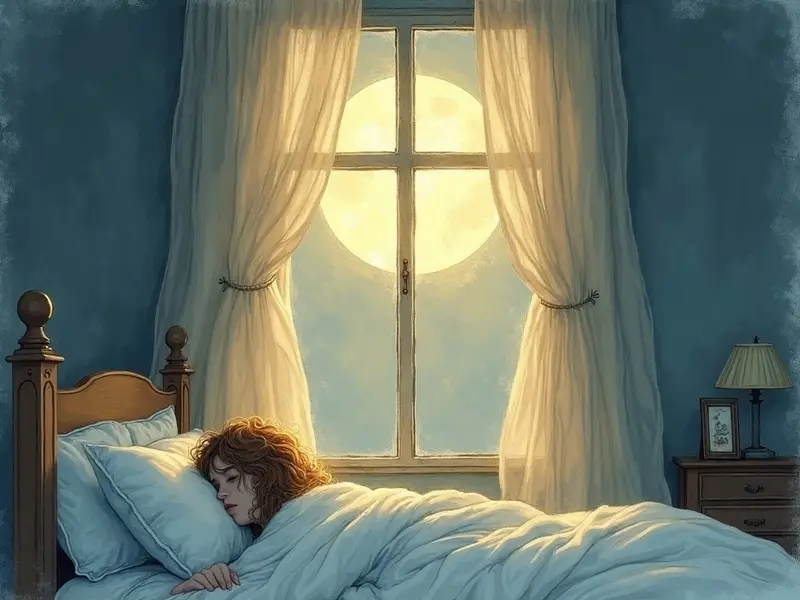
You wake up at 3 a.m., glance at the window, and there it is: a bright, round moon staring back like it has something to say. Coincidence, or is the full moon actually messing with your sleep? Scientists have spent years chasing that question, and the answer is more interesting than a simple yes or no.
What the Science Actually Found
For a long time, the idea that the moon disturbs sleep sounded like folklore passed down from grandparents and old wives' tales. Then in 2013, a team of Swiss researchers decided to test it properly. They went back through data from an older sleep study where participants had no idea their sleep would later be examined for lunar patterns, which helped rule out the possibility that people were simply expecting to sleep worse and then did.
The results surprised even the researchers. Around the full moon, brain wave measurements of deep sleep decreased by 30 percent, the time it took to fall asleep increased by 5 minutes, and total sleep duration was reduced by 20 minutes. These weren't just people saying they felt tired. This was objective brain activity measured in a lab. These changes were also linked to a drop in subjective sleep quality and lower levels of melatonin, the hormone tied to our body clock.
A follow up study a year later, involving a separate group of 47 healthy adults, found something similar. Total sleep time decreased by 25 minutes and cortical reactivity to environmental stimuli during sleep increased around the full moon, while REM sleep latency lengthened by 30 minutes around the new moon. Two different research groups, two different sets of participants, and a similar pattern showing up both times. That kind of repeat finding is what makes scientists sit up and pay attention.
It's Not Just Lab Data, It Shows Up in Real Life Too
Lab studies are useful, but bedrooms with wires taped to your scalp are not exactly normal sleeping conditions. So a team from the University of Washington, working with researchers in Argentina and at Yale, decided to track sleep in the real world instead. They used wrist sensors on people living in very different settings: rural communities in Argentina with limited or no electricity, and college students in Seattle with all the modern conveniences.
The scientists found that in the days leading up to a full moon, people went to sleep later in the evening and slept for shorter periods of time. What made this study remarkable is that the pattern held up regardless of location or lifestyle. The research team observed these variations in both urban and rural settings, from Indigenous communities in northern Argentina to college students in a city of more than 750,000, seeing the oscillations regardless of an individual's access to electricity, though the variations were less pronounced in people living with steady access to electric light.
That last detail matters a lot. It tells us this isn't purely imagination or suggestion. Even people who barely see the moon through city light pollution and curtains showed a milder version of the same pattern as people sleeping under open desert sky.
Why Would the Moon Do This
The leading explanation isn't magic or mysterious lunar gravity, it's light. Our bodies read brightness as a signal for stay awake and darkness as a signal for wind down. The most likely reason is light, since a bright moon in the evening can delay the body's internal clock, reduce melatonin, the hormone that signals bedtime, and keep the brain more alert.
Melatonin plays the starring role here. Your pineal gland ramps up melatonin production once it senses darkness, and that hormone helps ease you into sleep. Introduce extra brightness at night, even something as gentle as moonlight slipping through a window, and that release can be delayed or dialed down. When melatonin levels rise, serotonin, a feel good hormone that plays a role in controlling mood and appetite, decreases, and bright light from a full moon may have an impact on your ability to fall asleep and stay asleep because artificial light impacts our sleep wake cycle in the same way.
There's also a theory rooted in evolution. Long before streetlights and phone screens, moonlight was the brightest thing our ancestors ever saw after sunset. Some researchers suspect our bodies still carry a faint echo of that ancient rhythm, tuned to sleep a little lighter and stay a bit more alert on the brightest nights of the month, just in case. It would have been a useful trait when nighttime predators were a real concern. That idea is still being explored rather than proven, but it offers a gentle, sensible explanation for why this pattern might exist at all.
The Effects Are Real, But They're Modest
Here's the part worth keeping in perspective: nobody is losing entire nights of sleep because of the moon. The changes are modest, with most people losing only 15 to 30 minutes of sleep, though the effect is measurable. That's roughly the same amount of sleep you might lose from a slightly later bedtime or one extra episode of a show you're binge watching. It is not the same as a sleepless, restless night that leaves you exhausted the next day.
It's also worth mentioning who might feel this more than others. The effect appears strongest in places without artificial light, such as rural areas or while camping, and some research also suggests that men and women may be affected differently. A separate study in Hungary found that women reported more disrupted sleep during full moons than men did, though results across different studies haven't always agreed on this point.
That inconsistency shows up a lot in moon research generally. One sleep researcher not involved in the studies noted that essentially every report published up to that point had failed to show significant associations between the phase of the moon and any number of behavioral and physiological parameters. So while the newer, carefully controlled studies found a real signal, plenty of earlier research came up empty. Science doesn't always move in a straight line, and this topic is a good example of that.
What About Full Moons and Vivid Dreams
Many people report unusually vivid or strange dreams around the full moon, and while formal research on dream content specifically is thinner than research on sleep timing, there's a reasonable explanation worth considering. Lighter, more fragmented sleep tends to mean more awakenings during the night, and waking briefly during or right after a dream is exactly when dream recall is strongest. If the full moon nudges your sleep into a slightly lighter, more easily disrupted state, you may simply remember more of what you were dreaming, rather than actually dreaming something different or stranger than usual.
This lines up nicely with what the lab studies found about deep sleep decreasing around the full moon. Deep sleep is the stage where you're least likely to wake up and least likely to remember anything afterward. Less deep sleep and more time spent drifting near wakefulness could easily translate into mornings where the dream feels unusually detailed and easy to recall.
A Few Gentle Tips If Full Moon Nights Feel Restless
If you notice yourself tossing more around the full moon, a few small habits can help. Keeping the bedroom genuinely dark, whether with blackout curtains or a simple eye mask, removes the light variable entirely regardless of what phase the moon is in. Sticking to a consistent bedtime rather than pushing it later, even on a bright night, helps keep your internal clock steady.
And if you wake up with a dream still fresh in your mind, jotting down a few details before they fade can turn a restless night into something worth remembering. Whether you view lighter sleep as an inconvenience or as a small window into more memorable dreams is really up to you, and either way, the moon's effect on your rest tends to pass within a night or two as the lunar cycle moves along.
See also in the dictionary
Frequently asked questions
›Does the full moon actually keep people awake longer?
Yes, several studies found people take slightly longer to fall asleep and sleep for a shorter total time around the full moon, with one closely controlled study finding total sleep duration reduced by 20 minutes. The effect is real but small.
›Why would moonlight affect melatonin if it's so much dimmer than sunlight?
Even modest brightness can matter at night because our eyes are very sensitive to light once it's dark. A bright moon in the evening can delay the body's internal clock, reduce melatonin, and keep the brain more alert.
›Do vivid dreams happen more often during a full moon?
There isn't strong direct research on dream content and moon phase, but lighter, more fragmented sleep around the full moon may lead to more nighttime awakenings, which often means better dream recall the next morning.
›Does everyone experience this lunar sleep effect the same way?
No. The effect is strongest in places without artificial light, such as rural areas or while camping, and some research suggests men and women may be affected differently. People with regular exposure to bright indoor and outdoor lighting may notice it less.
›Should I be worried if my sleep feels off during a full moon?
Not really. The documented changes are modest, usually amounting to a loss of 15 to 30 minutes of sleep, similar to a slightly later bedtime. Keeping your room dark and your bedtime consistent can help smooth out any bump you notice.
- Evidence that the Lunar Cycle Influences Human Sleep - Current Biology
- Human sleep and cortical reactivity are influenced by lunar phase - ScienceDirect
- On nights before a full moon, people go to bed later and sleep less, study shows – UW News
- Does The Moon Affect Humans? - Cleveland Clinic
- Does the full moon make us sleepless: A neurologist explains the science - Space.com