
Death
Meaning, symbolism, and the upright & reversed reading.
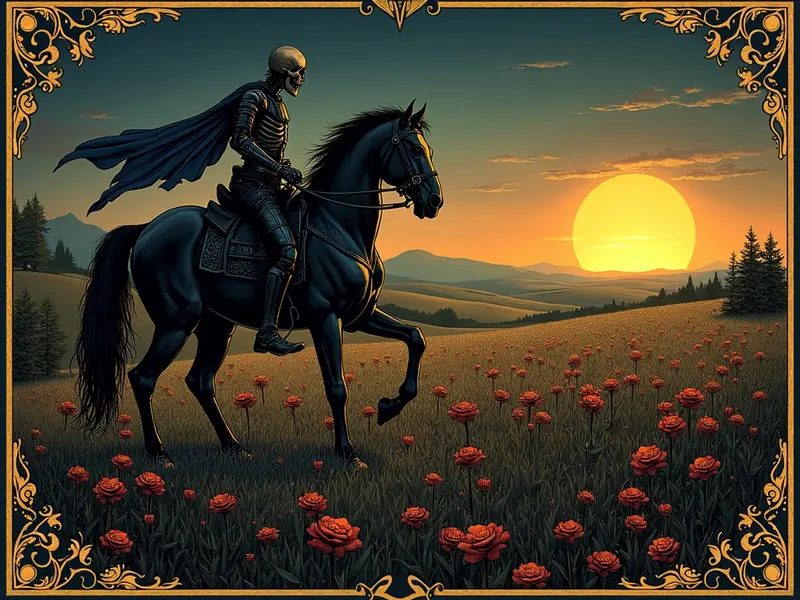
The Death card shows a skeletal figure in armor, often on horseback, moving steadily forward while a sun rises in the distance. People kneel or fall before this figure, but the sun tells the real story: something is ending so something else can begin.
This card rarely means literal death. It shows up when a chapter of your life has run its course, whether that's a job, a mindset, a routine, or a version of yourself you've outgrown. It asks you to let the old thing go instead of dragging it forward.
Upright, Death points to a real ending that's already underway, even if you haven't fully admitted it. A relationship, habit, job, or identity is closing out. This isn't punishment; it's clearing space. The card asks you to stop clinging to what's finished and let the natural transition happen, trusting that what comes after will fit you better than what you're releasing.
Reversed, Death often means resistance. You sense the ending but you're stalling, holding onto a relationship, job, or old identity past its expiration date. It can also point to a slow, partial transition, one you're making gradually instead of all at once. The invitation is the same: stop bracing against change and let yourself move through it at your own honest pace.
In love readings, Death usually means a relationship or a pattern within it has reached a natural end point. Sometimes that's the relationship itself; more often it's an old dynamic, like people-pleasing or holding back, that needs to go. For those single, it can mark the end of an old story about love before a healthier one begins.
At work or with money, Death signals a real shift: a role ending, a project closing, or a career path you've simply outgrown. It can feel unsettling, but it's rarely a warning of ruin. More often it's telling you the current setup can't hold what you're becoming, and a cleaner, more honest direction is on its way.
Frequently asked questions
›Does the Death card mean someone is going to die?
No. In tarot, Death almost never predicts physical death. It represents transformation, an ending that clears the way for something new, like the close of a relationship, job, or phase of life. Most readers see it as one of the most hopeful cards in the deck once the initial surprise wears off.
›What does Death mean spiritually?
Some see Death as a card of spiritual renewal, echoing the idea that we sometimes have to release an old self before we can grow into a truer one. In Christian-influenced readings, people sometimes connect it to themes of rebirth and letting go so grace can enter. It's read symbolically, not as prophecy.
›Is Death a bad card to pull in tarot?
It doesn't have to be. Death can feel intense because of its name and imagery, but most readers consider it a card of necessary change rather than misfortune. It often arrives when you're ready, even if part of you is still resisting, and it tends to open doors more than it closes them.