
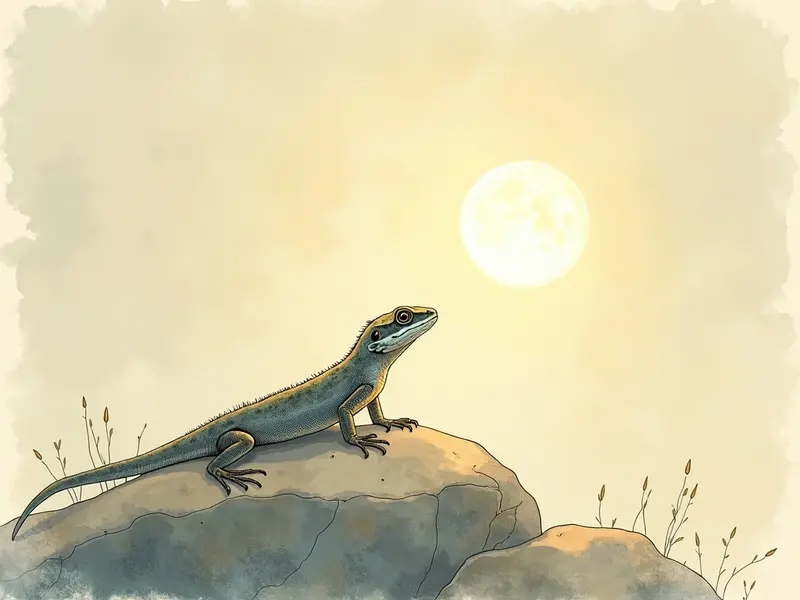
Gray lizard dream: what does it mean?
A gray lizard dream shifts a plain lizard's meaning away from sharp alertness and toward something duller, more ambiguous, and easier to overlook in daily life.
Dreaming of “lizard” with a detail
Lizards in dreams often represent quick instincts, small fears, or slippery thoughts that dart in and out of awareness. Gray adds a layer of neutrality to that. Instead of alarm or vivid emotion, gray suggests something muted, a worry that hasn't fully surfaced or a feeling you've been sitting with without much drama attached to it.
This color often shows up when your mind is processing something ambiguous, a situation where you don't have strong feelings yet, or where you've been avoiding a clear verdict. The gray lizard isn't threatening. It's more like a quiet reminder that something small and unresolved is still moving around in the background of your thoughts.
A calm gray lizard can mean you're handling a minor worry with a level head instead of overreacting. It may reflect emotional steadiness, patience with uncertainty, or a sign that you're comfortable letting an ambiguous situation resolve on its own timeline.
If the gray lizard felt unsettling or you couldn't stop watching it, it may point to a low-grade anxiety you've been ignoring. Something ambiguous in your life may need a clearer decision instead of being left in limbo.
More like this: all dreams about animals →


Frequently asked questions
›What does a gray lizard mean in a dream compared to other colors?
Gray tends to mute emotional intensity. Where a green or red lizard might reflect a specific active fear, a gray one usually points to something vague or emotionally neutral, a background concern rather than a pressing one.
›Is a gray lizard dream a bad sign?
No. Gray lizards aren't considered negative. They often reflect low-key uncertainty rather than danger, more of an emotional placeholder than a warning.
›Why do I keep dreaming about a gray lizard?
Recurring gray lizard dreams often mean an unresolved, low-priority worry keeps resurfacing because it hasn't been addressed. It's usually a nudge to give the issue a little conscious attention rather than letting it sit quietly.